

ʼPemi Aguda’s her debut short story collection, Ghostroots, dazzled with its treatment of tensions between the strange and the familiar.
Following its success, there was much anticipation for One Leg on Earth, Aguda’s debut novel, originally titled The Suicide Mothers and heralded ahead of publication as a masterpiece of the horror fiction genre. Those familiar with Agudaʼs writing will recognise in this debut the narrative elements and themes that distinguishes her work: an intense layering of psychological dread, an unsettling rendering of motherhood, and a chilling portrayal of Lagos life.
Yet, what worked so powerfully in the compressed world of short fiction does not always hold its full charge when stretched across the daunting length of a novel as is the case with her novel.
The opening of One Leg On Earth solidifies Aguda’s deft hand for disquieting horror: a pregnant woman stuck in Lagos traffic, Miriam Aiki, is seduced by a dark and strange power. Losing her grip on reality, she takes a fatal leap.
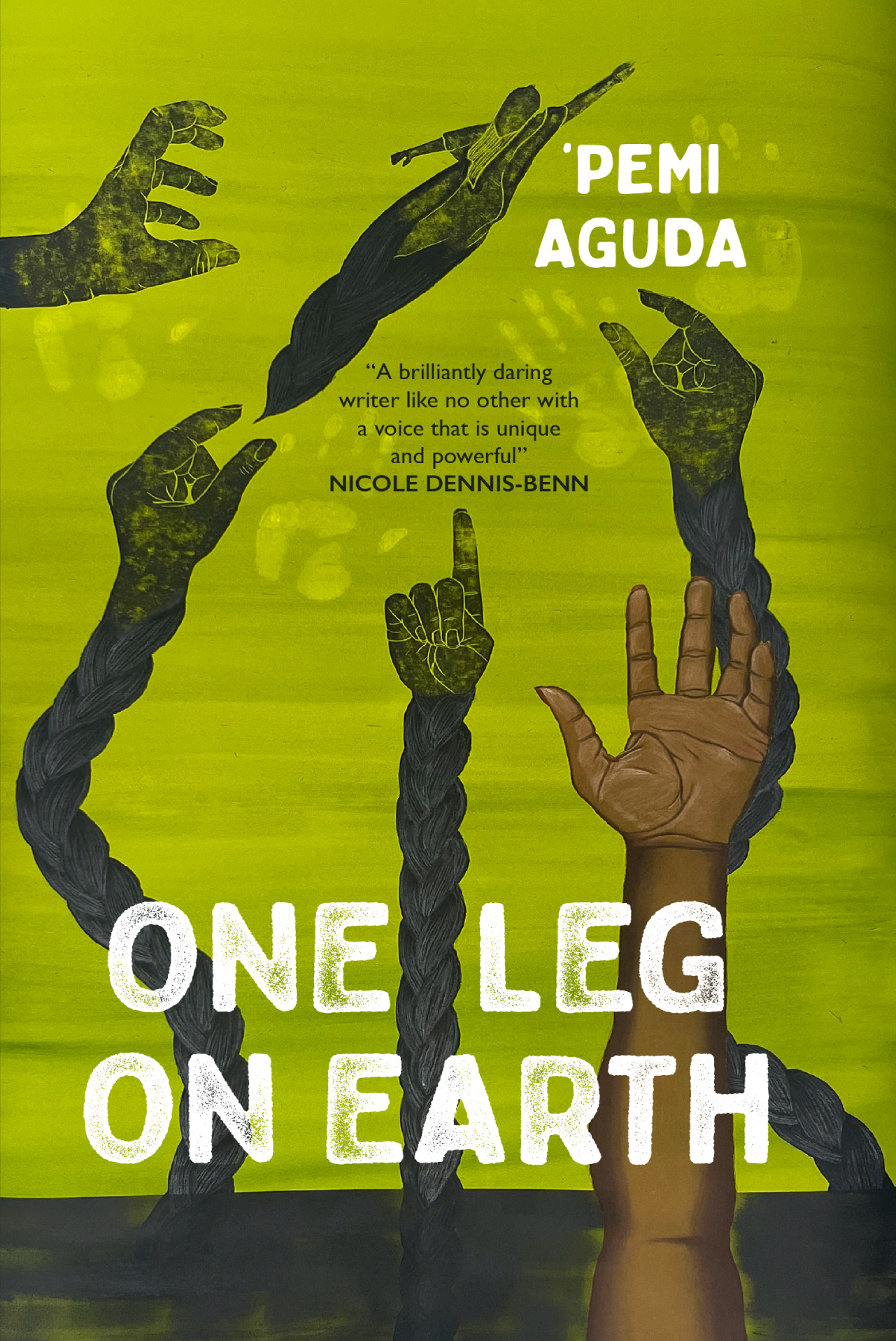
We are then introduced to the novelʼs protagonist, Yosoye Bakare, a young woman who arrives in Lagos for her compulsory year of national service. But Yosoye is also looking to enjoy the freedom and pleasures that Lagos offers, away from the watchful eyes of her mother, with whom she shares a testy relationship. As Aguda writes, Lagos is a vast body of endless waves of pleasure and possibility, and Yosoye succumbs to “a feeling of being swept up in a current, dragged in the surge of a ravenous tide.” After a hazy one-night stand, she falls pregnant.
Yosoye soon begins working at the architectural firm JKD, which draws her directly into an ambitious project: Omi City, a massive luxury real estate development achieved by land reclamation from the Atlantic waterfront. Aguda quickly establishes, through Yosoye’s eyes, the significant moral fault of this project. After all, Lagos is a city stained by real records of environmental neglect and brutal displacement of poor, indigenous settlers. These people, perpetually at the mercy of corporate greed and vicious impunity dressed as leadership, are sacrificed for more aestheticised visions of the city.
One Leg on Earth does not merely establish these themes of class inequality and environmental degradation; it weaves them into a dreadful mystery that also incorporates strains of Yoruba folklore. As more pregnant women surrender to watery deaths, Yosoye is plagued by nightmarish visions and ominous signs. She becomes the vehicle through which Aguda projects a dark representation of motherhood, subtly pointing at the deeper horror of a city that fails to mother and nurture its citizens, choosing capitalist greed over true equity. Lagos is a mother that feeds on her own children.
This theme of corporate greed entangled with environmental neglect was also explored in Okungbowa’s Lost Ark Dreaming, reviewed here, which envisioned a futuristic Lagos nearly submerged in water.
Beyond this predominant theme, Aguda also explores mental health and reproductive justice, exclusion and loneliness, and bodily autonomy in relation to feminine agency. In One Leg on Earth, the pregnant woman is “a god that should be worshiped,” a liminal figure with one leg “on earth, one leg in heaven.” In this sense, the suicidal actions of the women read as spiritual resistance, a divine revolution against greed, indifference, and exclusion. Almost as if the women are saying: “We would rather surrender to water than bring life into a future that has no space for us.” This internal logic becomes especially pointed when Yosoye encounters a group of wealthy pregnant women who are unaffected by the force that claims their less-privileged counterparts.
However, the conclusion of One Leg on Earth may feel underwhelming, especially to readers unfamiliar with Aguda’s fiction. In her short fiction, Aguda’s balancing of narrative resolution and thematic undercurrent was devastatingly effective. In a full-length novel, this balance proves harder to sustain. The ending arrives too abruptly, leaving one to wonder whether Aguda could not have further developed Yosoye’s character arc, even within the novel’s own thematic framework. If intentional, it fumbles as a narrative strategy.
That caveat notwithstanding, One Leg on Earth is a solid and assured debut. Rendered in prose that is intimately gorgeous, its narrative and underlying messages make this folk horror novel one of the finest fictional efforts of the year. As literature that places Lagos and motherhood at its centre, it achieves creative resonance and invites endless critical interpretations. And for ʼPemi Aguda, it establishes her further as one of the most important voices in global literature today.
***Sima Essien is an award-winning writer based in Uyo. Catch him on @abasima_essien