
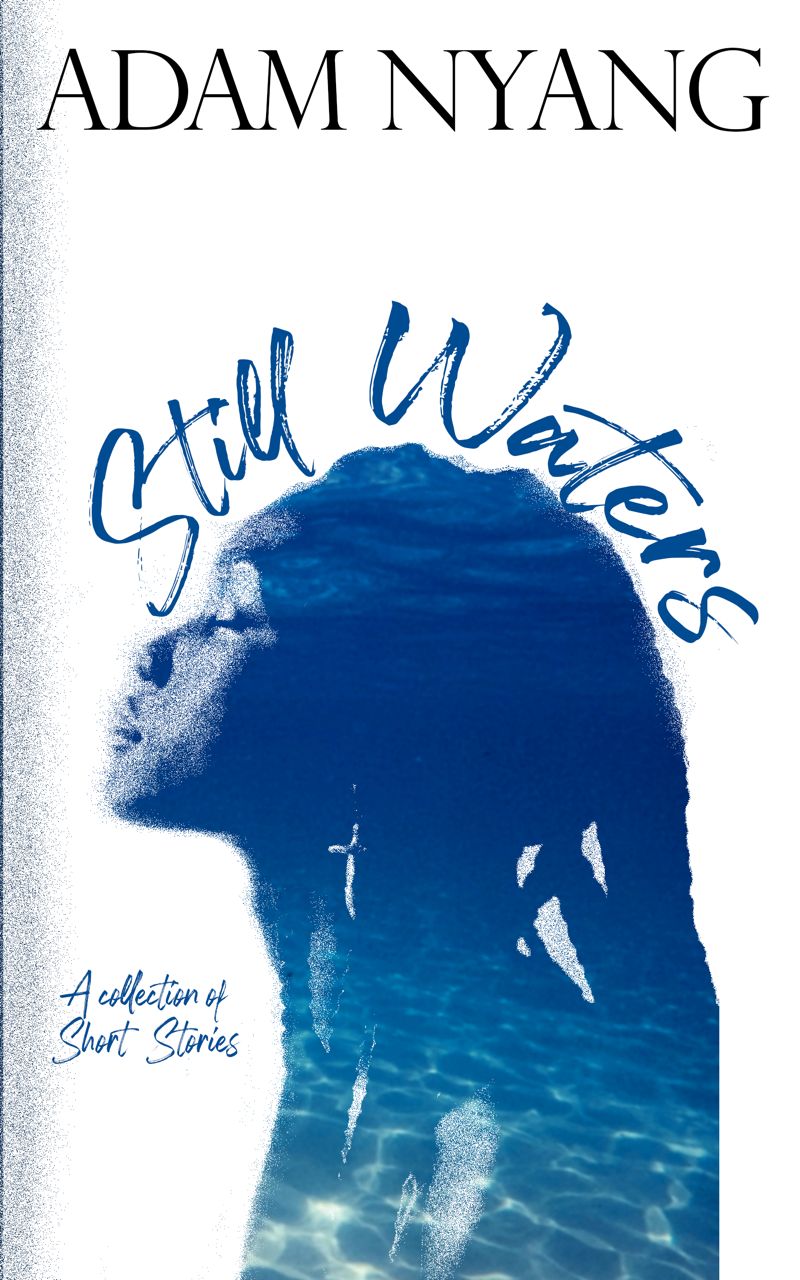
Reading Still Waters, the short story collection by Adam Nyang, there were moments when I was hit with the uncanny feeling that the author had been eavesdropping on some of the recent chats and conversations between me and my closest girlfriends.
The likelihood of this was a geographical impossibility for one but then seeing as many women as possible around the world share similar concerns, was it really a surprise that I, a fellow West African, would find glimpses of my situation and circumstances in Nyang’s fictional portraits of the lives of Gambian women?
Nyang is not shy in acknowledging that she is stepping into a strong tradition of women’s writing in West Africa, evident from the way her work evokes classics like Changes by Ama Ata Aidoo, The Stillborn by Zaynab Alkali, and So Long a Letter by Mariama Bâ.
Nyang burst onto the literary scene in 2013 with the novel Agonies and Fortunes. Despite being a teenager at the time, she showed considerable promise and remarkable insight, as well as a conscientious commitment to addressing social issues through fiction. These traits have only strengthened with time.
Each of the ten stories in this collection highlight women’s everyday realities, and Nyang presents us with a kaleidoscope of different kinds of women. Here we have the hyper independent and the co-dependent, the insecure and the confident, all of whom are grappling with the conflict between duty and autonomy in their own unique ways.
In ‘Endu’, a happily married woman is rattled after a chance encounter with her teenage paramour, while in ‘Prayer Beads’, a Gambian student in Morocco wrestles with her faith following the loss of her father. In ‘Waiting for Dawn’, a woman in a long-distance marriage begins an affair with her gardener when her husband postpones his return from America, and in ‘Upstream Colour’, a woman bucks against marriage and motherhood altogether, opting for a life of travel and adventure instead.
In each of these slice-of-life stories, Nyang pays equal attention to her protagonists’ emotional lives and the decisions they make in the light of their social pressures and economic realities. In doing so, she also challenges patriarchal norms, however her critiques are measured. Take for instance, the matter of laabaan, a Wolof marital rite where proof of a bride’s virginity is presented post-consummation. While some like the scholar Marame Gueye frame the practice in sex positive terms, Nyang believes otherwise and uses her protagonist Sainabou, who questions the ceremony’s necessity, as a vehicle to remonstrate it.
At the same time, she finds plenty in the other rituals associated with the murr, as the traditional wedding ceremony is called in Wolof, to celebrate, showing that she can balance critique with cultural appreciation.
This penchant for cultural appreciation is apparent in the way she incorporates the Wolof language into the book’s dialogue and some of the story titles, with her use in the latter adding an extra layer of creativity.
In ‘Janaeer’, which roughly translates as daydreaming, Kani emerges from a fugue state with recollections of a long-repressed memory. ‘Giss Giss’ means perspective, and in that story, Nyang demonstrates a woman’s shifting attitude towards and eventual acceptance of polygamy; it helps, of course, that the author presents an idealised version which can serve as a model for polygamy done right.
There is a lot of emphasis on interpersonal relationships here. Womanhood may present tribulations, Nyang appears to be arguing, but friendships and sisterhood loosen the yoke. Considerable space is also given to romantic liaisons with the opposite sex, which are presented in a realistic, pragmatic fashion. Nyang has a frank, unashamed approach towards female sexuality, and her erotic scenes are spicy without being salacious.
Much like the proverbial still waters that run deep, Nyang’s fiction demonstrates that the African woman’s life, no matter how banal it might appear on the surface, holds considerable depth, and must never be underestimated.
***Akumbu Uche is a writer and storyteller from Nigeria. Her works have been published by thelagosreview.ng, Aké Review, Brittle Paper, Canthius, The Cincinnati Review, and elsewhere. Catch her on X @xoakumbu