

Femi Osofisan has always understood that stories can shape a nation. He has used them on the stage, in novels and in the public square. For more than fifty years he has been a storyteller and a commentator who writes with clarity and purpose. His work has helped Nigerians see themselves more honestly and has challenged leaders to confront the consequences of their decisions. Few writers have moved so easily between art and public life. Even fewer have done so with such consistency or such moral steadiness.
His voice has never been limited to the theatre. Readers of the Daily Times, The Guardian and The Nation knew him as a columnist who wrote about the country with insight and courage. His essays examined corruption, inequality, and the daily struggles of ordinary people. He wrote about the long queues, the broken promises and the quiet acts of resilience that kept the country going. He wrote about the frustrations that Nigerians carried with them each day and the small victories that made life bearable. He wrote with the belief that silence in the face of injustice is dangerous. He wrote with the conviction that a nation must look at its own wounds if it hopes to heal.
The Public Commentator
Osofisan’s commentary grew from the same impulse that shaped his fiction. He believed that stories could reveal truths that official statements often hide. His columns described the frustrations that Nigerians faced every day. He wrote about the gap between what leaders promised and what citizens experienced. His language was simple and direct because he wrote for the public, not for a small circle of critics. He understood that the newspaper page was a place where ideas could reach people quickly and where a writer could speak to the conscience of a nation.
He also understood that commentary is not only about pointing out faults. It is also about reminding people of their own strength. Many of his essays celebrated the endurance of ordinary Nigerians who continued to work, create, and hope in spite of hardship. He believed that the country’s future depended on the courage of its citizens as much as on the decisions of its leaders. His writing encouraged readers to see themselves not as victims of circumstance but as participants in the shaping of national life.
Osofisan’s public voice was shaped by his early experiences. He grew up in a country that was finding its way after independence. He lived through military rule, economic crises, and political upheaval. These experiences sharpened his sense of responsibility. They taught him that a writer cannot stand aside when society is in trouble. They taught him that words can be a form of resistance.
Fiction Born on the Newspaper Page
Many of his novels began as serials in the newspapers. They were written for readers who bought the paper on their way to work or read it in the evening after a long day. These stories were shaped by the rhythm of weekly deadlines and by the need to speak plainly. They were also shaped by the knowledge that readers would return each week only if the story spoke to their lives. The newspaper page became a training ground where he learned to write with precision and emotional honesty.
Maami is one of the most enduring of these works. It tells the story of a boy raised by a single mother who struggles to protect him from poverty and danger. The novel shows the strength of Nigerian women who carry families through hardship. It also shows how memory can heal the wounds of childhood. The story remains relevant because the challenges faced by Maami are still faced by many Nigerian mothers today. The novel’s emotional power lies in its simplicity. It is a story of love, sacrifice and the quiet heroism that often goes unnoticed. It is also a story about the cost of poverty and the ways in which children learn to navigate a world that is often unkind.
Abigail follows a young woman who tries to find her place in a society that judges her before it understands her. Her journey reflects the tension between tradition and modern life. It shows how young Nigerians, especially women, must navigate expectations that often limit their choices. The novel speaks to the ongoing struggle for personal freedom in a society that is still negotiating its values. Abigail’s story is not only personal. It is also political. It asks what kind of space Nigeria creates for its young people and how much room it gives them to grow.
Cordelia explores the cost of ambition in a world where power often shapes truth. It is a story of love, betrayal, and the search for integrity. The novel mirrors the wider national struggle to hold on to moral values in the face of political and economic pressure. Cordelia’s choices reflect the choices that many Nigerians face when confronted with systems that reward compromise and punish honesty. The novel asks whether it is possible to remain true to oneself in a society where truth is often negotiable.
Pirates of Hurt takes readers to the margins of society. It follows characters who live with hunger, fear, and the desire for escape. The novel exposes the violence that grows out of poverty and forces readers to confront the human cost of inequality. Its relevance to Nigeria is clear. It shows how neglect creates its own victims and how desperation can lead to destruction. It also shows how society often turns away from those who need help the most. The novel is a reminder that poverty is not only an economic condition. It is also a moral challenge.
From Page to Screen
The power of these stories has travelled beyond the newspaper and the printed book. Tunde Kelani, one of Nigeria’s most respected filmmakers, adapted Maami into a feature film that brought the story to a new generation. The film captures the tenderness and hardship of the original novel and highlights the emotional bond between mother and child. It also deepens the social themes that run through Osofisan’s work, especially the resilience of women and the long shadow of poverty. Kelani’s visual style gives the story a new dimension and allows viewers to feel the weight of Maami’s sacrifices.
Kelani also adapted Cordelia, turning the novel’s intimate drama into a visual exploration of desire, betrayal, and the search for truth. The film presents the moral tension at the heart of the story and shows how personal choices are shaped by the pressures of society. It brings to the screen the same questions that the novel asks about integrity and survival. The adaptation highlights the emotional complexity of the characters and the social forces that shape their decisions.
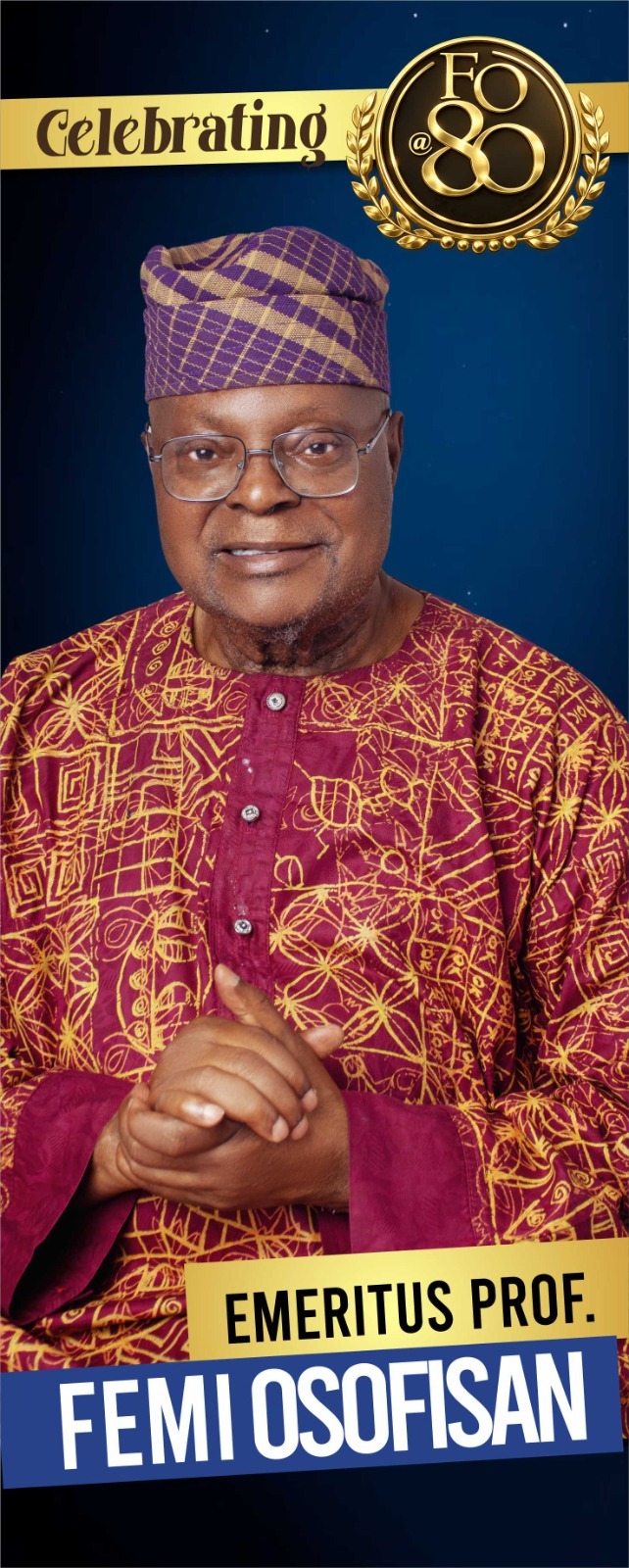
Both films will be screened in Lagos this June as part of the events marking Osofisan’s eightieth birthday. Their inclusion in the celebrations is a reminder of how far his stories have travelled and how deeply they continue to resonate. The screenings will bring together readers, theatre lovers, filmmakers, and students who have grown up with his work. They will also introduce his stories to younger audiences who may know his name but have not yet encountered the full range of his writing. The Lagos events will celebrate not only the writer but also the communities that have kept his work alive.
The Dramatist as Commentator
Osofisan’s plays also speak to the same issues he addresses in his essays. In Once Upon Four Robbers, he uses the story of young men trapped by poverty to question a society that punishes the poor while protecting the powerful. In Morountodun, he shows how rebellion grows when people are pushed to the edge. In The Chattering and the Song, he uses music and ritual to show how communities can rebuild themselves after conflict.
These plays are not only works of art. They are acts of commentary. They ask what justice means in a society marked by inequality. They ask how communities remember trauma. They ask what responsibilities citizens owe to one another. They show that storytelling can be a form of civic engagement. They also show that theatre can be a place where a nation examines itself.
A Voice That Still Matters
At eighty, Osofisan remains a vital presence in Nigerian cultural life. His plays are still staged. His novels are still read. His essays are still quoted. He continues to speak at public events and to write with the same clarity that marked his early columns. He has lived long enough to see his ideas tested by several generations, yet he has never lost his belief in the power of words.
He once said that the newspaper taught him to write for people, not for critics. That lesson shaped his career. It shaped his fiction, his drama, and his public commentary. It shaped the way he speaks to the nation.
Femi Osofisan remains important because he has never stopped telling stories that matter. He has never stopped asking the questions that many prefer to avoid. He has never stopped believing that Nigeria can be better than it is. His work continues to remind us that storytelling is not only an art. It is a form of citizenship.
***Dr Adeyemi, an Osofisan scholar, is Associate Professor of Drama at the University of East Anglia, United Kingdom.