

Abazu is an HIV-positive Nigerian entrepreneur living in Lagos. Advances in medicine have left his health on an even keel, he but still prefers to share his truth with only a few.
Dilibe, his friend, is a disturbed man for a different reason. And biracial Dakota, the third leg of the tripod, is a daring woman, who, after losing her only child to a messy divorce, chooses to have a baby for a man years younger than her.
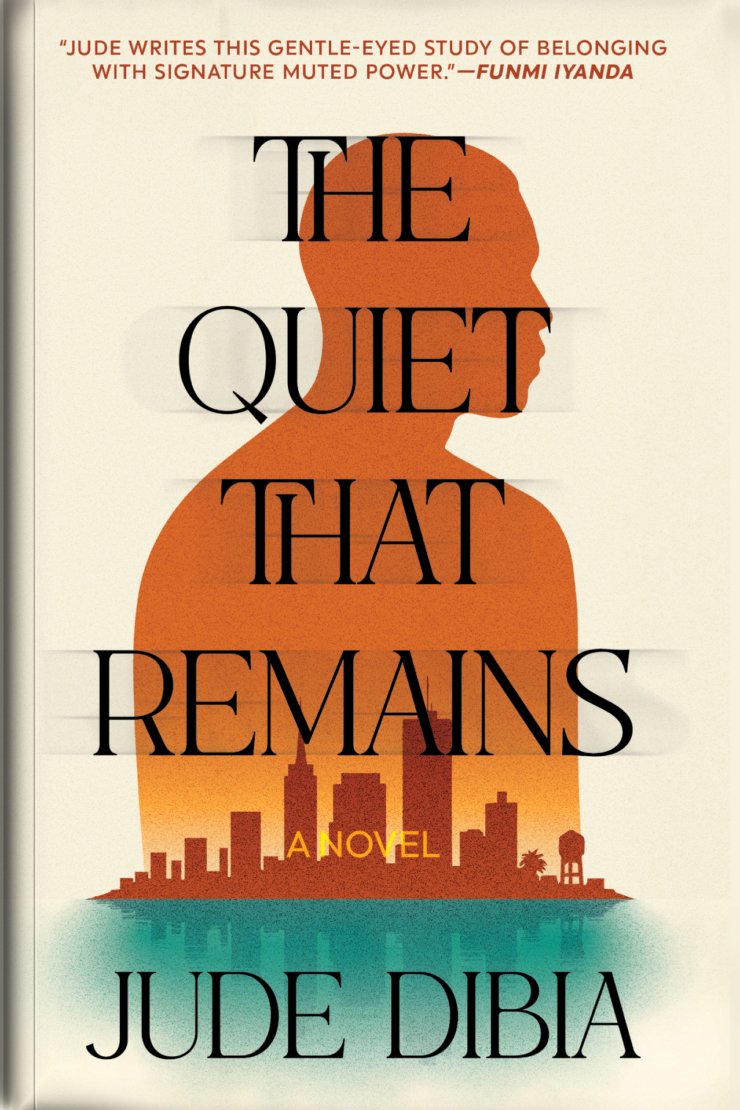
In The Quiet That Remains, Jude Dibia follows these three friends in a sparkling novel in which misunderstandings fester in quiet spaces and silence reveals the interplay between individual agency and external pressure.
In The Quiet That Remains, we peer into the inner turmoils of these friends with a haunting honesty. We also see how their friendship is tested and how they weather the storm.
They meet regularly at Abazu’s bistro where they share drinks, food, their worries and their plans.
Abazu’s story touches on the lapses and lack of empathy in the Nigerian public health system: Nurses who act like bullies, endless queues of patients waiting to see overworked doctors and facilities so outdated they only help death claim patients seeking cure faster.
Through Abazu’s lens, Dibia shows us how even after the giant strides in HIV treatments, the ignorant still sees it as death sentence and not like diabetes that can be managed. In such a situation, carriers die more of stigma than the disease itself and they are forced into trying to do things to control the narrative around their health.
The novel also examines the family unit. In Abazu’s case, he is convinced his family will either not understand his health status or see it as God’s punishment for his gay status so he keeps it from them. Friends fill the vacuum where family should be.
What the author sheds light on through Dilibe’s family is quite different. We watch as Dilibe and his younger brother, Chiedu, fail to connect emotionally and physically. They have always been that way. When Dilibe reluctantly picks his brother up from the airport on arrival from the UK, they share no hug, no handshake, nothing intimate. Even conversations are forced and vital questions are left unasked and even those asked are answered not fully.
In Dakota’s case, after her marriage crashed, her mother gifts her a four-bed house in Ikoyi and well-meaning relatives regularly check on her.
The novel also touches on parenting, how it affects siblings and the way they relate to themselves. We see how Dilibe’s father wasted his praises and gifts on the children of friends and treated his own children with aloofness.
This novel is about choices or agency. The major characters are mutineers, non-conformists. When the society goes right, what tickles their fancies is the left. So, despite parental pressure, Abazu remains true to himself and insists being gay is biological; despite his father’s ultimatum and his mother’s attempt to get him a wife, Dilibe chooses to remain single and wonders what is wrong with celebrating his choice to remain remain single the same way weddings are celebrated; and despite the odds, Dakota chooses to have a baby on her own terms shutting out the man whose sperm fertilised her eggs.
These characters have to pay the price for being different. They have to deal with the society laughing at them, rumours swirling around them and suspicion rearing its head almost everywhere they go.
The novel is also about change. We discover that with time people change. They are no longer content with what used to give them joy and they begin to crave stuff that never used to matter to them. For instance, someone can just suddenly crave having a baby, another can feel like having a companion and another can begin to see life beyond running a business venture.
In another breadth, the novel probes the uneasy terrain of truth telling, its weight, its consequences, and its quiet persistence. It asks what it means to speak plainly in a world that often punishes honesty, showing how the act of telling the truth can wound, fracture relationships, and upend carefully constructed lives.
It equally explores how truths withheld do not disappear but fester, distorting memory, corroding trust, and exacting often deeper toll. In this tension between revelation and concealment, the narrative suggests that truth, whether spoken or suppressed, is never without consequence; it demands a reckoning either way.
Set on the noisy city of Lagos and the quiet Abuja metropolis, The Quiet That Remains beams its light on the dread of being left behind, forgotten, or rendered invisible by those whose presence gives life meaning. Through its characters, the novel reveals how this fear can govern choices, and distort love. We see the fragile human longing to be seen, chosen, and kept.
The motif of silence runs through the novel, shaping its emotional landscape and deepening its tensions. Characters retreat into silence as a shield against pain. In this novel, silence becomes a language of its own. It speaks in pauses, in averted gazes, in unfinished sentences. Relationships are defined as much by what is withheld as by what is expressed, and the gaps in communication often widen into emotional chasms.
Aside the three main characters, another remarkable character is Nanavi, who Dilibe’s mother thinks will make him a good wife. She turns out crazier than Dilibe in her commitment to being single and enjoying life largely on her own terms.
In this work, Dibia uses words carefully. He leaves things to the imagination of the reader, giving a reader the leverage, the power to fill the gaps. In a lot of situations, the reader needs to pay attention, too, because not doing so means missing important points wrapped in concise prose.
Dibia makes every voice come alive in immersive prose. His depictions of the lives of these men and woman are fascinating.
Overall, The Quiet That Remains is a beautifully rich and vibrant piece of literature, which, by threading silence through its narrative, invites readers to hear not just what is said, but what lingers in the quiet and to reckon with the profound consequences of both.
***Olukorede S. Yishau is the author of two novels: In The Name of Our Father and After The End; a collection of short stories: Vaults of Secrets; and a travel book: United Countries of America and Other Travel Tales. He is concluding work on his third novel. He lives In Houston, Texas.