

On Friday, the 17th of July, lovers of music in Abuja thronged the National Universities Commission (NUC) Auditorium to watch the flamenco singer and multidisciplinary artist, Niño de Elche, deliver a rousing performance.
Accompanied by guitarist, Francisco ‘Cisco’ Perez Mazon, at home on both the classical and electric guitar and playing the tocaor to his cantaor, de Elche’s setlist included the songs Caña por Pasodoble, Farruca Amarga, and Guajiras del Alma, among others.
True to cante flamenco fashion, the rhythms were supplemented with finger clicks, foot stomps and hand claps, while de Elche’s passionate singing covered a vast emotional spectrum, ranging from profound sorrow to exuberant joy.
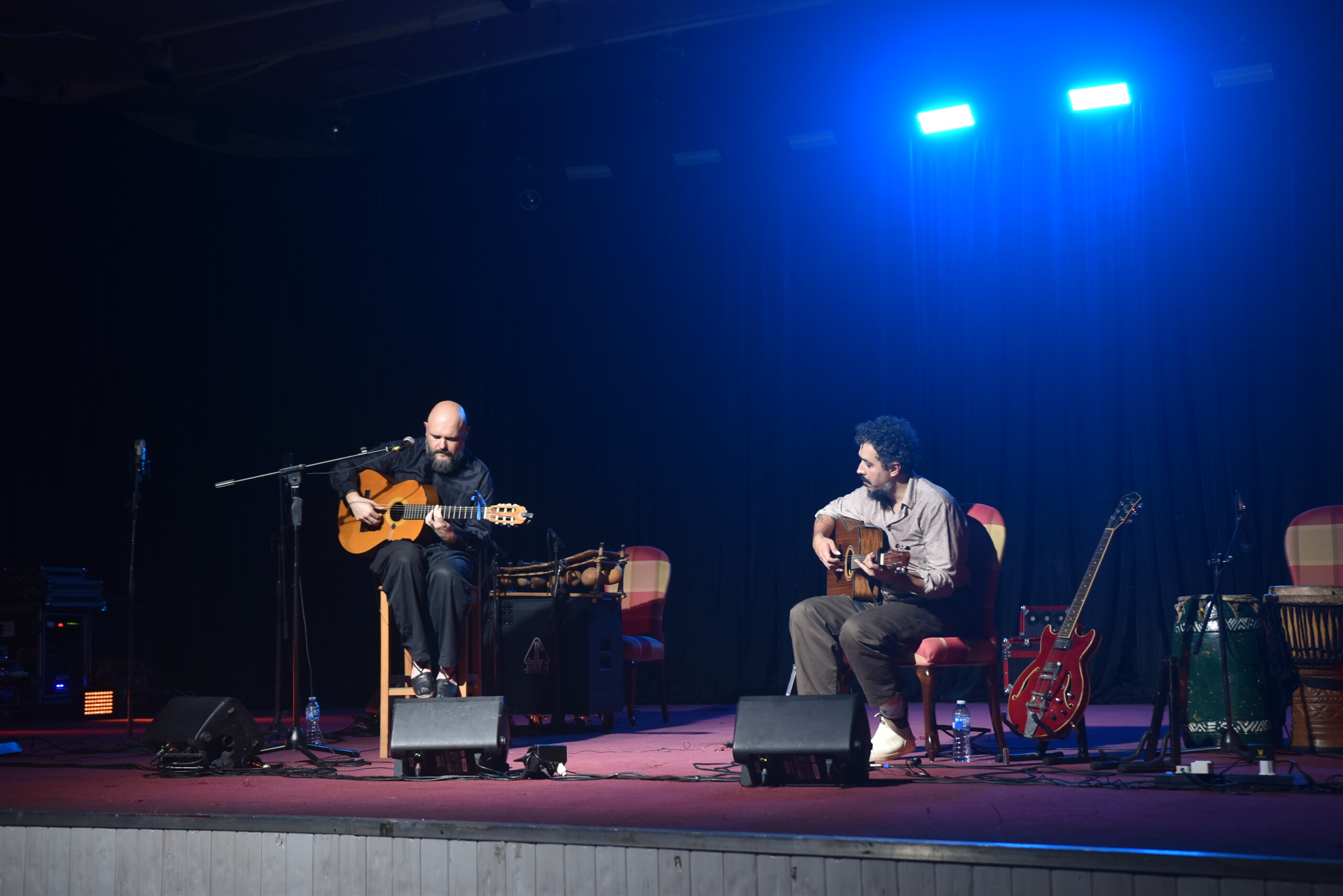 While de Elche may be more famous in his native Spain than in Nigeria, the classically trained singer, together with the popstar Rosalía and Raül Refree, both of whom he has collaborated with, is part of a growing cohort of Spanish musicians who are constantly experimenting with sound and are introducing both the traditional and innovative forms of flamenco to a global audience.
Granting a backstage interview to The Lagos Review, the artist summed up his musical philosophy thus: “I like to have an open approach to my music, and I like to demystify flamenco.”
Asked about other contemporary flamenco artists he would recommend to people interested in exploring the musical genre, he suggested getting acquainted with the works of Yerái Cortés, Raül Refree, and Rocío Márquez, and announced the 2027 release of a new album that would combine spoken word, techno, and electronica elements.
 Recalling his visit to the National Council for Arts and Culture and a jam session with the National Troupe the previous day, he spoke about how the experience helped him realise certain similarities in traditional Iberian and African music styles, suggesting a common musical heritage. “There is a direct connection between Africa and Spain musically, and that is through flamenco”, he observed.
He also expressed an eagerness to familiarise himself more with Nigerian music in general and spoke warmly of the warm reception he had been given during his brief stay, hinting at the possibility of a return visit.
De Elche’s recent trip to Nigeria, and by extension, his concert, was facilitated by the Spanish Embassy as part of their cultural diplomacy efforts, which have been instrumental in strengthening economic ties and goodwill between Spain and Nigeria.
Opening remarks delivered separately by Juan Diego Martín Dembour, the First Secretary at the Spanish Embassy, and Susan Ojoma Ogohi, Director of the Performing Arts Department, National Council for Arts and Culture, emphasised the power of music to transcend borders, bridge cultural gaps, and unify diverse communities.
Fittingly, the final performance before the curtain call featured a collaboration between Niño de Elche and the National Troupe that fused traditional percussion and Igbo choral singing with Spanish flair, creating a new harmonious and exciting sound.
Photos courtesy of Eva Barta Martín