

My Journey to The Lagos Review Writing Weekend
I had imagined Lagos before I arrived. In my imagination, it was a city that did not wait for
anyone: traffic pressing against traffic, people moving with the urgency of people who had somewhere to be, the sea somewhere beyond the buildings. I had been to Lagos before, but this time I was travelling towards something I had wanted for a long time. I was going to The Lagos Review Writing Weekend to meet other writers.
Perhaps that was why the waiting began to feel almost deliberate.
I arrived at Nnamdi Azikiwe International Airport before the other Abuja-based participants. Jonathan arrived after I did, followed by Keyu and Charity, who had survived a broken-down car on their way there. We checked in our luggage and went upstairs to wait. Keyu and I bought snacks and sat together, getting to know each other.
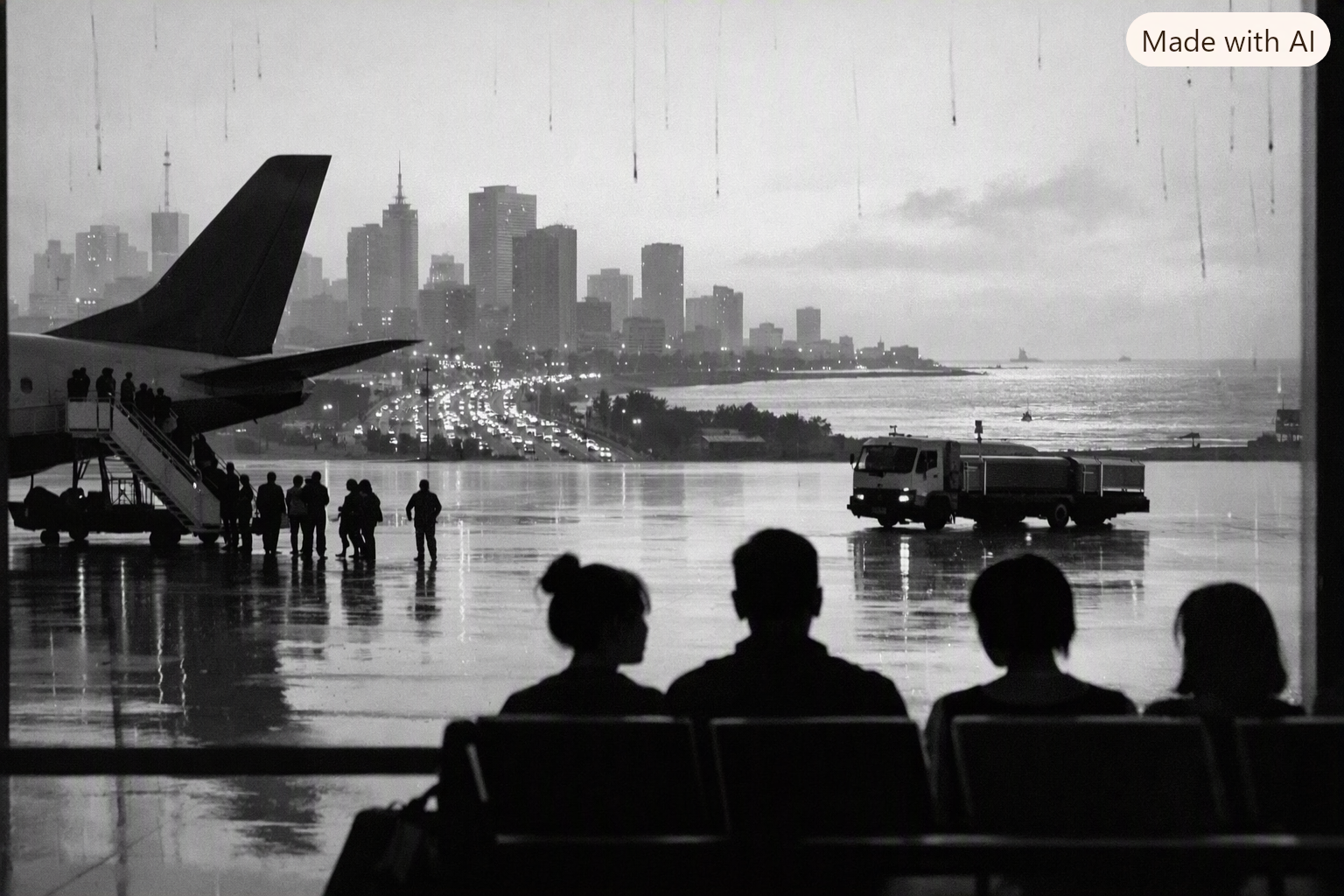
Our flight was scheduled for noon. Then two-thirty. By three, we were finally boarding. I
settled beside Charity, relieved to be leaving Abuja behind, when the pilot announced that the aircraft needed fuel.
There was something almost comical about it. Lagos was somewhere ahead, impatient andunknowable, while I sat in an aircraft that could not yet move.
When we eventually arrived, the airport floors were wet from the rain and by the time we
reached the hotel, it was almost 6pm. We settled into our rooms before gathering for the
welcome meeting.
The next morning, I found myself sitting among writers whose work I had never encountered.
I had come expecting to learn, but beneath that expectation was a quieter fear: what if the
piece that had got me through the door was the only good thing I had ever written? This was a fear I had not dared put into words because it seemed too embarrassing to admit that a writer could be afraid of having already written her best work.
 But there it was.
Across sessions with Tony Kan, Oris Aigbokhaevbolo, Akumbu Uche, Eghosa Imasuen and
Adewale Maja-Pearce, we returned repeatedly to the question of what makes writing matter.
A review, we learned, should do more than recount a work. It should reveal what the work
does to us and why. Criticism could be rigorous without being cruel, because behind every piece of writing is a person who has risked putting something of themselves on the page.
That idea stayed with me.
Before the workshop, I had encountered reviews that seemed to wear their seriousness
visibly, carrying structure, technique, form and critical framing like badges. There was nothing wrong with any of that. But I had often wondered where the person experiencing the work had gone.
I do not want to write as though I am standing outside a story with a clipboard.
I want to get inside it.
Then the writers began reading their reviews of our assigned short story and film. As i listened it appeared as if everyone seemed to have noticed something I had missed. A detail I had overlooked became important in someone else’s reading. A scene I thought I understood opened up further possibilities.
Listening to them, I realised that perhaps this was what writing required: not certainty, but the willingness to keep looking.
Somewhere between those readings, shared meals and quiet conversations, the people I had met at the airport stopped feeling like strangers. The city outside the workshop continued moving in its usual Lagos way, but inside that room, I had found a slower kind of movement—the movement of ideas between people.
On the journey back, I thought about the hours spent waiting to leave Abuja. I had imagined Lagos as a city that did not wait for anyone. Yet my journey had been made of waiting: waiting for the flight, waiting to arrive, waiting for the workshop to begin, waiting for the confidence to speak.
Maybe the waiting had been necessary.
I came to Lagos hoping to gain knowledge. I left with new friends, a deeper understanding of writing, and something I had not known I was looking for: permission to keep becoming.
The city had not given me an answer about whether I was a writer.
It had given me something better—the room, the people, and the discomfort of discovering that there would always be more to learn.
And perhaps that is what a journey is supposed to do.
Not prove that you have arrived, but to keep your eyes focused just beyond the horizon.
**Mariam Abdullahi was a member of the first cohort of The Lagos Review Writing Weekend.