

Some childhood experiences remain powerful long after we acquire the vocabulary to interrogate them.
Agbara Nla, Mike Bamiloye’s defining 1993 gospel miniseries, belongs to that category for an entire generation of Nigerians. Distributed on VHS and broadcast on state television, it lodged itself into the cultural memory with the force of something experienced rather than merely watched.
Its villain, Isawuru, became one of Nigerian popular culture’s recognisable figures. Its world – a village under spiritual siege, with faith as its only credible resistance- shaped how a generation understood the relationship between the seen and unseen.
Agbara Nla: The Return, which opened in cinemas on October 2, carries that legacy from VHS and our living rooms into the multiplex.
The film grossed over ₦71 million from preview screenings before recording a ₦170.6 million opening weekend, reportedly the biggest non-December Nollywood opening on record. They suggest that the audience for ambitious indigenous storytelling is larger, and more commercially significant, than conventional exhibition wisdom would have us believe.
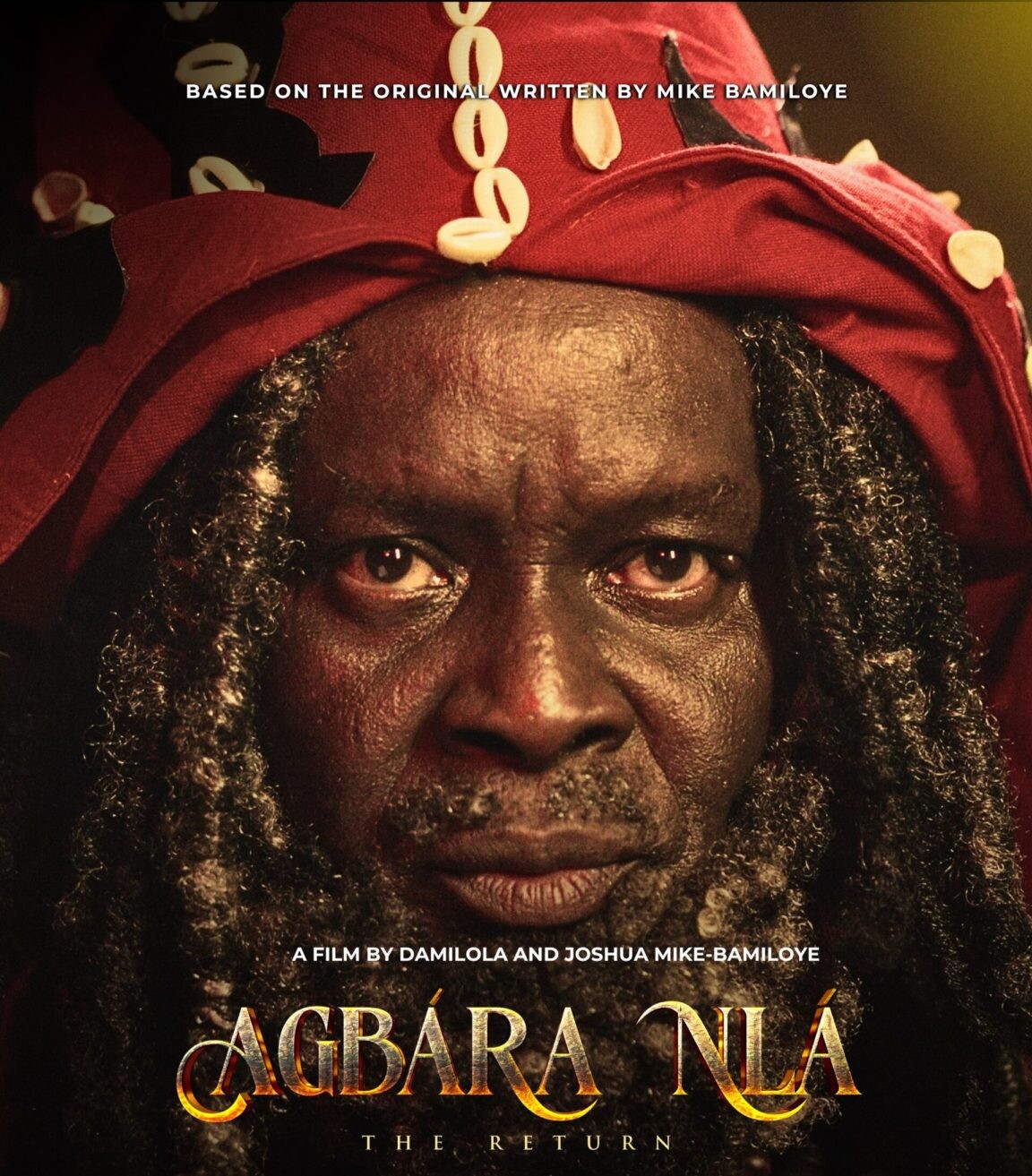 Co-directed by Damilola Mike-Bamiloye and Joshua Bamiloye, sons of the original’s creator, who reprises his iconic role as Isawuru, the film condenses more than ten hours of source material into a three-hour feature. Damilola’s screenplay largely meets the challenge. Characters are introduced coherently, the villain receives motivation beyond mere menace, and the central dramatic question (what happens when a community’s spiritual infrastructure is dismantled from within?) is developed with seriousness. The Saul-to-Paul arc at the film’s moral centre gives the narrative a shape that the original episodic production was never required to provide.
The film leans into Mount Zion’s vintage horror conventions, with practical effects that terrified children watching on CRT televisions, treating horror and suspense as cinematic tools. The art direction impresses, particularly in the forest coven sequences and the elaborate depiction of the marine kingdom. These environments demonstrate an understanding of how visual world-building sustains belief. The cinematography uses camera movement to build tension rather than merely signal technical competence. The supernatural is not simply a plot device here; it is the film’s visual language, and the more tangible its environments feel, the more immediate the spiritual threat becomes.
Yet the question the film does not entirely answer is the one its success raises: how much are audiences responding to the film itself, and how many memories it has been granted access to?
Nostalgia is not a critical failing; it is a legitimate emotional register, and a film that activates it effectively is doing real work. But it complicates the distinction between achievement and inheritance. When Isawuru delivers a line that audiences remember from childhood VHS screenings, their response is not entirely a response to what is on screen. Decades of familiarity can make its strongest moments feel more affecting than the drama alone might warrant. Criticism must distinguish the power of shared memory from the craft of the film carrying it.
The film has formal shortcomings. Its largely effective score occasionally overwhelms quieter scenes, filling emotional spaces that might have been more powerful if left open. The three-hour runtime tests patience in its final movement, where the film’s accumulated conflicts and explanations begin to compete for room. And the cultural debate surrounding Mount Zion’s portrayal of Yoruba spiritual practices as inherently malevolent does not disappear with improved production values. The film neither meaningfully engages this criticism nor complicates the worldview behind it. That silence is revealing – technical growth does not necessarily entail a wider imaginative or cultural perspective.
None of this erases what Agbara Nla: The Return accomplishes. It is assured, ambitious and frequently thrilling popular cinema. More importantly, it is a cultural event that demonstrates the commercial possibilities of indigenous storytelling rooted in shared memory as was evident in Ramsey Nouah’s reboot of Living in Bondage: Breaking Free. Its success deserves to be taken seriously, even as the film itself remains open to scrutiny.
***Joseph Jonathan is a Film & Culture Critic and an alumnus of The Lagos Review Writing Weekend workshop 2026. Catch him on X @chukwu2big