

Abubakar Adam Ibrahim knows how to tell riveting-but-tragic love stories in ways that are elevated, in a style that is not banal or soppy but rather as important additions to the corpus of good writing.
In his first novel, the Nigeria Prize for Literature-winning Season of Crimson Blossoms, the focus is on the forbidden love between a young man and an older woman set amid larger issues of national and global relevance.
In his second novel, When We Were Fireflies the love story is one that transcends time and seasons, a love story almost nulli secundus, focused on the ever-relevant issue of reincarnation, a love story that makes one conclude that this world we live in is extra-ordinary.
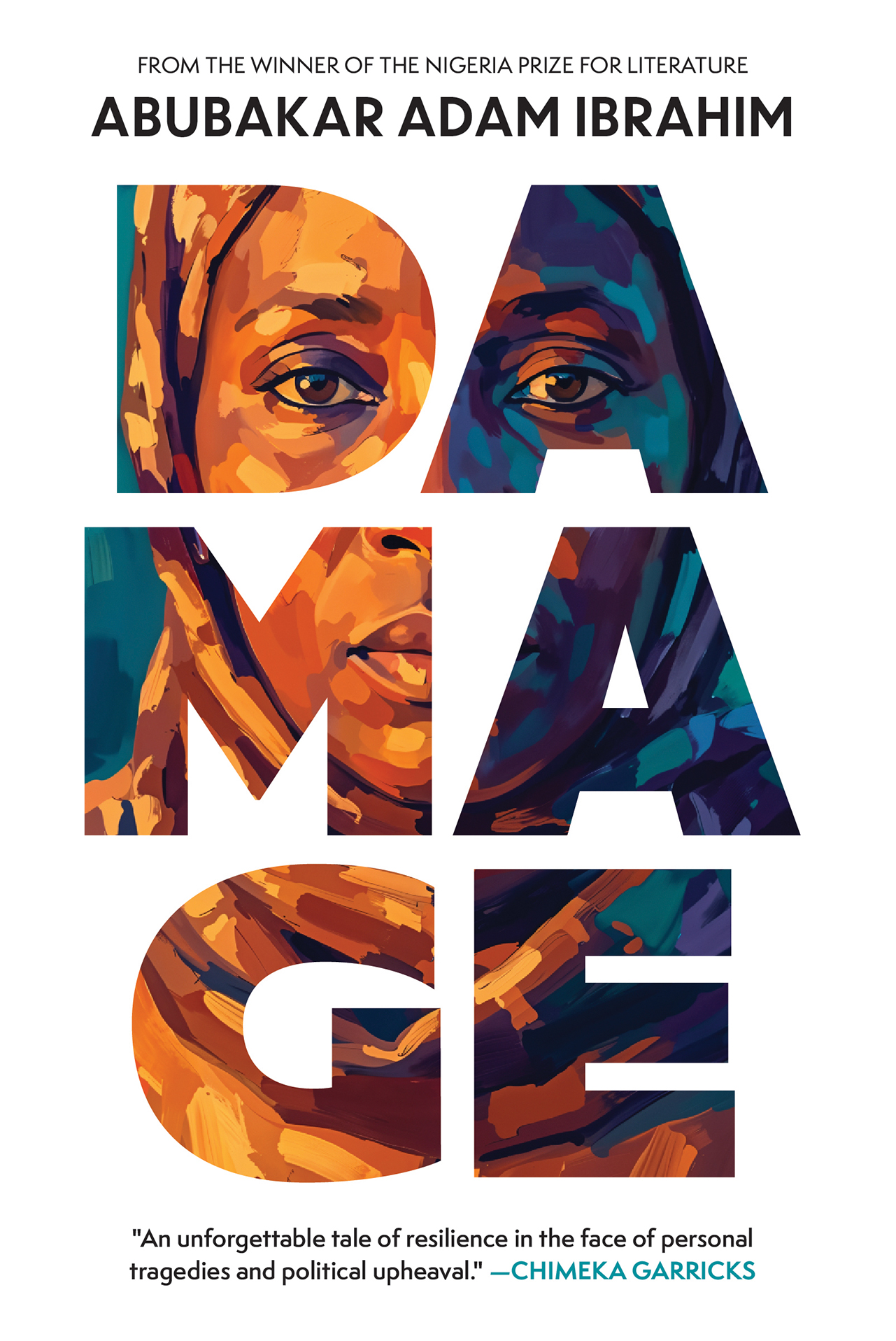
Now, Ibrahim is back with his third novel, with a love story wrapped around very critical dates in Nigerian history and an issue most of its victims and the society like to shy away from while the victims are left ashamed of falling prey to men who deserve to be castrated.
It might not be out of place to describe Damage as quasi historical fiction, even though the historical events it brings back are as recent as the early and late 90s.
 The novel begins on June 12, 1993, the day Nigerians trooped out en masse, to elect Bashorun MKO Abiola as their President over Alhaji Basiru Tofa. As we read on, we encounter other historically important dates from that era.
We witness the day General Sani Abacha pushed aside the Ernest Shonekan-led Interim National Government and declared himself Head of State. There is June 4, 1996, the day Kudirat Abiola, Abiola’s most senior wife at the time, was killed and then we come across the day Ken Saro-Wiwa, the author of the rotten-English novel ‘Sozaboy’, was executed. We are also presented with the day Abacha himself died mysteriously and we also witness anew the horror critics of the military junta went through.
The novel follows, largely, Nasrin Amin and then Aliyu Bello, whose hate for dictatorship knows no bounds and his critical take on the Abacha regime. Bello, as was the case with other activists like Olisa Agbakoba, Femi Falana, Babafemi Ojudu, Nosa Igiebor, Onome Osifo-Whiskey and others, finds himself in trouble. It also follows Nasrin’s children: Mustapha, Suraj, and Zubaida. There are a few others too.
Nasrin, as a voter, sets out to vote on June 12, hoping that her participation in the electoral process, will birth a new Nigeria, where epileptic power supply will become history, where security of lives and properties will be guaranteed, where infrastructure will be top notch and where citizens will be proud to identify as Nigerians anywhere in the world.
While trying to do her civic duty, she meets Aliyu, who is an electoral officer, and a spark is lit and amid the disappointment of an annulled election, a forced Interim National Government and a palace coup, the spark grows into a fire, a fire so monumental that the best fire fighter in the world will struggle to quench it.
But, the joy of their union is troubled by the chaos in Nigeria, the chaos Aliyu cannot keep quiet about, the chaos that soon visits him and tears things apart and puts asunder what God has joined together.
The author ensures the love between Nasrin and Aliyu doesn’t overshadow the critical issues of the era. So, we clearly see the evil of dictatorship, how it limits freedom, how it curtails rights, how it damages citizens and dictates how they should live their lives and how it tries to force everyone into conformity and how it is not the form of government for a decent society.
Ibrahim’s twist in the tale is the introduction of General Shehu Jarumai, the man whose generosity Nasrin’s son’s dream of becoming a pilot rests on, but he is also the man behind memories she has buried for years, memories of the damage he has done to her, memories that show Jarumai in his true colours and not the borrowed robe of a philanthropist.
This sub-plot takes this literary gem to a whole new level and from there on, the pacing shifts and leaves the reader racing to find out what happens next. What evolves eventually is a beautifully executed work of art imitating life and giving it meaning and colouration.
In this work, set in Abuja, Nigeria’s seat of power, and Jos, the city where the author grew up and lived for decades, nothing is contrived but carefully plotted so that before a major development is unfolded, signs precede it; before someone is killed, we would’ve been shown the instrument of murder.
For instance, before we meet the General and learn of his damage to Nasrin, we have seen her have nightmares that leave her husband worried, but which she finds difficult to explain.
Another great use of this literary tactic is in the use of letters as a plot driver. Before the letters are used for a major revelation about the General’s damage to Nasrin, we casually learn of their existence so when they now resurface to help make sense of events from the past, we are not taken aback. Instead, we have no choice but to doff our hats in recognition of the genius behind it.
At points, while devouring this delicious dish that has the right quantity of almost every ingredient, the urge to choose my best among the author’s three novels swarmed my mind, but the more I read the more herculean it became. My conclusion is that each is in a class of its own, each a king of a kingdom with a people so pleased the thought of japa-ing does not cross their mind. So, why choose one greatest of all times when I can have three?
Damage, I daresay, succeeds in opening our minds to groundbreaking and important perspectives on a crime against humanity in a world that likes to shame the victim and protect the perpetrator.
***Olukorede S. Yishau is the author of two novels: In The Name of Our Father and After The End; a collection of short stories: Vaults of Secrets; and a travel book: United Countries of America and Other Travel Tales. His third novel, Black Market, is forthcoming from Masobe Books. He lives in Houston, Texas.