

In the global parable of the Neo-Imperialist Sower, Africans in the diaspora are the seeds scattered on rocky, hard and thorny ground. In true parabolic fashion, only the narrator’s version of the story is told, its message passed across: that home is the good soil, and any other representation of things would be a misrepresentation. And so, these seeds germinate as hybrid entities, composites of faraway things, lusting after the good soil.
Affinity Gallery’s art exhibition, Borders and Other Myths, reclaims this narrative and retells the story through six voices. As the popular proverb goes, until the lion learns to write, every story will glorify the hunter. So also, these people have learned to paint, mold, print and capture their stories, dispelling these preconceptions and relegating them to mythical status: mere imagined disparities and differences, much like the physical construction of a border.
 A geographical border is an official line that serves to delineate geographical areas. It does not bar the exportation of culture, neither does it inherently define that which it separates. It is easy to forget this when the question of origin comes into play, but some may argue that nascence speaks more about parenting than about the soil in which the seed germinates.
Affinity Gallery’s exhibition, expertly curated by Laura Twagirayezu, is a deeply expository one, taking you through multidisciplinary interpretations of what self-authored cultural identity can look like.
Ernest Amabibi’s The Craftsman series speaks of sophistication within the melding of multiple cultures. Using the same muse, the different photographs are sharp, neo-antiquated representations of poise and suavity, portraying both Western and African stylistic elements.
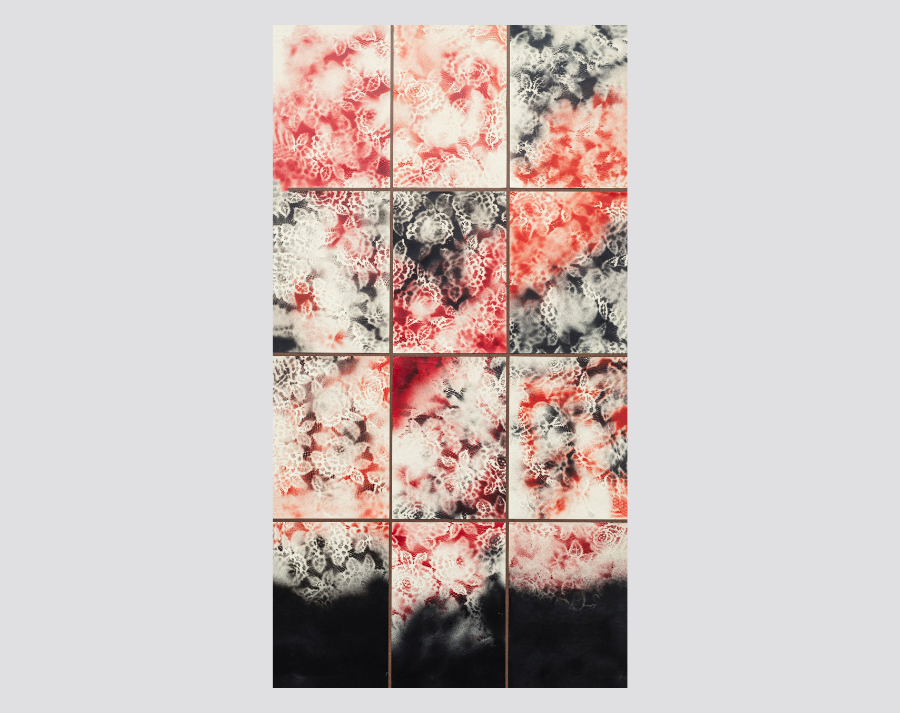 Hamed Maiye uses lace prints to carry stories. The lace serves as a motif throughout the sequence, from when it is most brilliant to when its brilliance is gradually blotted out, until it eventually darkens. There can be multiple inferences made from these images, but the chief consideration is to acknowledge the multiplicity of possibilities in their interpretation.
Chigozie Obi delivers a thoughtful carousel in her paintings, from the initial To Run with Horses to the final collage of the previous three paintings in To Be One and All. The romantic flourish in her art is unmissable as she generates characters with brilliant white hair streaked with glitter, frozen in nature. The capture of the camera does not do justice to the deta
In the global parable of the Neo-Imperialist Sower, Africans in the diaspora are the seeds scattered on rocky, hard and thorny ground. In true parabolic fashion, only the narrator’s version of the story is told, its message passed across: that home is the good soil, and any other representation of things would be a misrepresentation. And so, these seeds germinate as hybrid entities, composites of faraway things, lusting after the good soil.
Affinity Gallery’s art exhibition, Borders and Other Myths, reclaims this narrative and retells the story through six voices. As the popular proverb goes, until the lion learns to write, every story will glorify the hunter. So also, these people have learned to paint, mold, print and capture their stories, dispelling these preconceptions and relegating them to mythical status: mere imagined disparities and differences, much like the physical construction of a border.
 A geographical border is an official line that serves to delineate geographical areas. It does not bar the exportation of culture, neither does it inherently define that which it separates. It is easy to forget this when the question of origin comes into play, but some may argue that nascence speaks more about parenting than about the soil in which the seed germinates.
Affinity Gallery’s exhibition, expertly curated by Laura Twagirayezu, is a deeply expository one, taking you through multidisciplinary interpretations of what self-authored cultural identity can look like.
Ernest Amabibi’s The Craftsman series speaks of sophistication within the melding of multiple cultures. Using the same muse, the different photographs are sharp, neo-antiquated representations of poise and suavity, portraying both Western and African stylistic elements.
Hamed Maiye uses lace prints to carry stories. The lace serves as a motif throughout the sequence, from when it is most brilliant to when its brilliance is gradually blotted out, until it eventually darkens. There can be multiple inferences made from these images, but the chief consideration is to acknowledge the multiplicity of possibilities in their interpretation.
Chigozie Obi delivers a thoughtful carousel in her paintings, from the initial To Run with Horses to the final collage of the previous three paintings in To Be One and All. The romantic flourish in her art is unmissable as she generates characters with brilliant white hair streaked with glitter, frozen in nature. The image captured by the camera does not do justice to the details in the paintings.
In the oil on canvas works by Cortney Heron, one finds otherworldly representations of connection: body flowing into space, into form, melting articles with the figure of the painting. It truly mystifies the feelings the paintings evoke.
Carine Mansan uses brilliant shades of warm colours to evoke a dreamy aura in her paintings. Her works are deeply thought-provoking and emotive.
Myles Igwebuike challenges what is considered antiquated and functional against a cultural backdrop. He praises Igbo architectural prowess, which favours functionality over design, while also showing the recurrence of usefulness in both old and new patterns.
From the exhibition, it is evident that there is no hard-and-fast rule to any of the works portrayed, no direct theme, merely representations of concepts of identity, indigenous and non-indigenous. This is not to say that there are no similarities in perceptions among people of similar experiences. However, these similarities do not aid in the negation of proximity to culture; rather, they demonstrate its exportation.
Perhaps this is the greatest myth that Borders and Other Myths dismantles: that culture belongs exclusively to the soil from which it emerges. A border may define where culture originates, but it cannot determine where it travels.
Borders and Other Myths is still showing at Affinity Gallery in Lagos. Link to art works: https://galleryaffinity.com/exhibition/borders-other-myths#
**Keyukemi Usani is an undergraduate Law student interested in cultural commentary. Her instagram handle is @keyu.0rg. Her X handle is @k3yukem1