

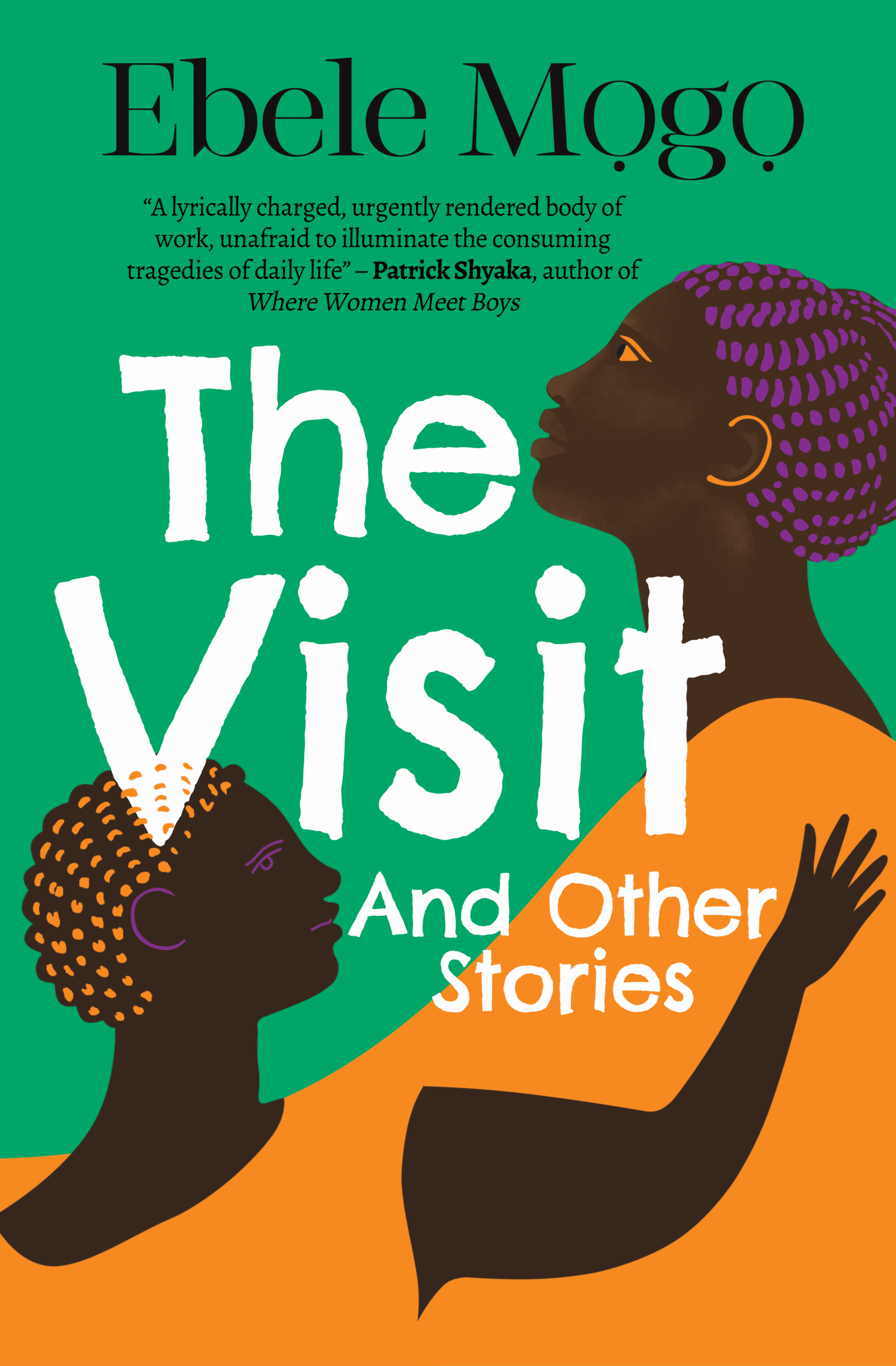
The Visit and Other Stories, Ebele Mọgọ, 2026; Masobe, pp 187
According to conventional wisdom, people are wired for success either in the arts or in the sciences. However, the historical existence of figures like Leonardo DaVinci (painter and inventor), Omar Khayyam (poet and mathematician), Brian May (rock guitarist and astrophysicist), and William Carlos Williams (poet and medical doctor) — polymaths who have excelled in both fields — proves otherwise.
Closer home, we have Ebele Mọgọ, an accomplished computational scientist and doctor of public health whose debut publication, The Visit And Other Stories, places her in esteemed company. A former child prodigy who graduated from university at the age of 18, Mọgọ is an alumna of several elite institutions in Europe and North America and she has held prestigious fellowships and leadership positions. Evidently, she has racked up an impressive CV in her primary career but how do her creative writing skills measure up?
“Write what you know” is an oft-repeated writing tip. Given how some of the stories in the collection appear to be inspired by her public health science background, it is counsel that Mọgọ herself must have encountered and yielded to. Her insider knowledge of this field informs her approach to storytelling and she writes about death and illness matter-of-factly. In ‘29 steps’, Mr. Igwe ignores his hypertension diagnosis to his family’s detriment. The protagonist of ‘The Woman with the Broken Mind’ is a care-leaver who struggles with the double whammy of depression and an eating disorder, and in ‘The Mad Man’, an unexpected tragedy catalyses a psychotic break in the titular character.
But there is more to Mọgọ’s literary output than simply serving up fictionalised versions of medical case studies. She also has an activist’s penchant for calling out moral wrongs and society’s failings as evidenced in stories like ‘Mother Sacrifice’ which exposes the conflation of puberty with sexual maturity that encourages child marriages, and ‘29 Steps’ in which a bigoted gossip spreads a false rumour about members of a rival ethnic group turning into mosquitoes to suck people’s blood.
 Whether her characters are wily runs girls in Calabar, grief-stricken teenagers in Nibo, or lonely immigrants in Canada, Mọgọ pays careful attention to how psychogeography influences their behaviour and guides their decisions.
Most of the characters here are Igbo which gives Mọgọ the perfect opportunity to weave Igbo-language proverbs and colourful sayings into the dialogue. In addition to this, taking time to document contemporary and vintage natural hair styles like ‘Evelyn King’, ‘police cap’, ‘tea cup and saucer’, and ‘two steps’ as she does in ‘Mother Sacrifice’ proves that she has both the cultivated eye of a cultural anthropologist and faith in the power of literature to preserve cultural memory and identity.
The titular story ‘The Visit’ which takes on the perspective of a ghost shows a willingness to look past realism and venture into speculative fiction. This experimentation is repeated in ‘The Curse’ in which supernatural and material realities coexist, and ‘Going West’, an imagined future where Lagos is engulfed by terrorist attacks. Although the story in ‘The Curse’ feels incomplete and the chronological sequence of certain events in ‘Going West’ could be more finely tuned, these are minor missteps in the grand scheme of things.
On the other hand, the strongest stories in the collection are ‘Sunday’, which follows a pastor’s wife regretting her decision to give up a promising career in STEM to support her husband’s ministry, ‘Ada Bekee’, in which a Nigerian diasporan reconnects with her family after years abroad, and ‘The Definition of Thief’ which traces how the loss of a parent exposes two brothers to cult activities on campus; tales which seem disparate on their first reading but all share a preoccupation with parental aspirations and family bonds.
There are a few stories in here that read like the opening pages of a novel, and they each have the potential to be a good one. It would be interesting to see what Mọgọ does should she attempt the longer form. With her record of excellence in everything she has done, including The Visit And Other Stories, the author has already proven that she possesses the Midas touch.
**Akumbu Uche is a writer and storyteller from Nigeria. Her works have been published by thelagosreview.ng, Aké Review, Brittle Paper, Canthius, The Cincinnati Review, and elsewhere.