

At first glance, it appeared that the visitors trooping into Abuja bookstore Spine & Label on the afternoon of Saturday, the 18th of April, were only there to do some weekend book shopping, but it soon became apparent from their choice of purchase that the city’s literati had arrived a few hours early for the celebration of Kill the Poet, Save the World! — the debut poetry collection by Abdulkareem Baba-Aminu.
Originally released on the 28th of March, Kill the Poet, Save the World! has been described by its publisher, Masobe Books, as “electric with Africanfuturist vision.”
“Some of the poems in this collection are as old as 25 years, and some are as young as 25 weeks ago,” Baba-Aminu divulged to the audience of over one hundred, before proceeding to read out a selection of eight poems to thunderous applause. The event, which was moderated by the performance poet and UN Global Advocate for Peace, Maryam Bukar ‘Alhanislam’ Hassan, also marked Baba-Aminu’s first ever in-person public reading. [Earlier this month, Baba-Aminu had participated in a virtual poetry reading organised by the Poets in Nigeria Initiative (PIN) in conjunction with 60 Seconds Poetry.]
Having already garnered critical praise from literary heavyweights like Abubakar Adam Ibrahim, Bash Amuneni, and Richard Ali who wrote the book’s introduction, Baba-Aminu’s work also drew accolades from audience members during the Q & A interactive session.
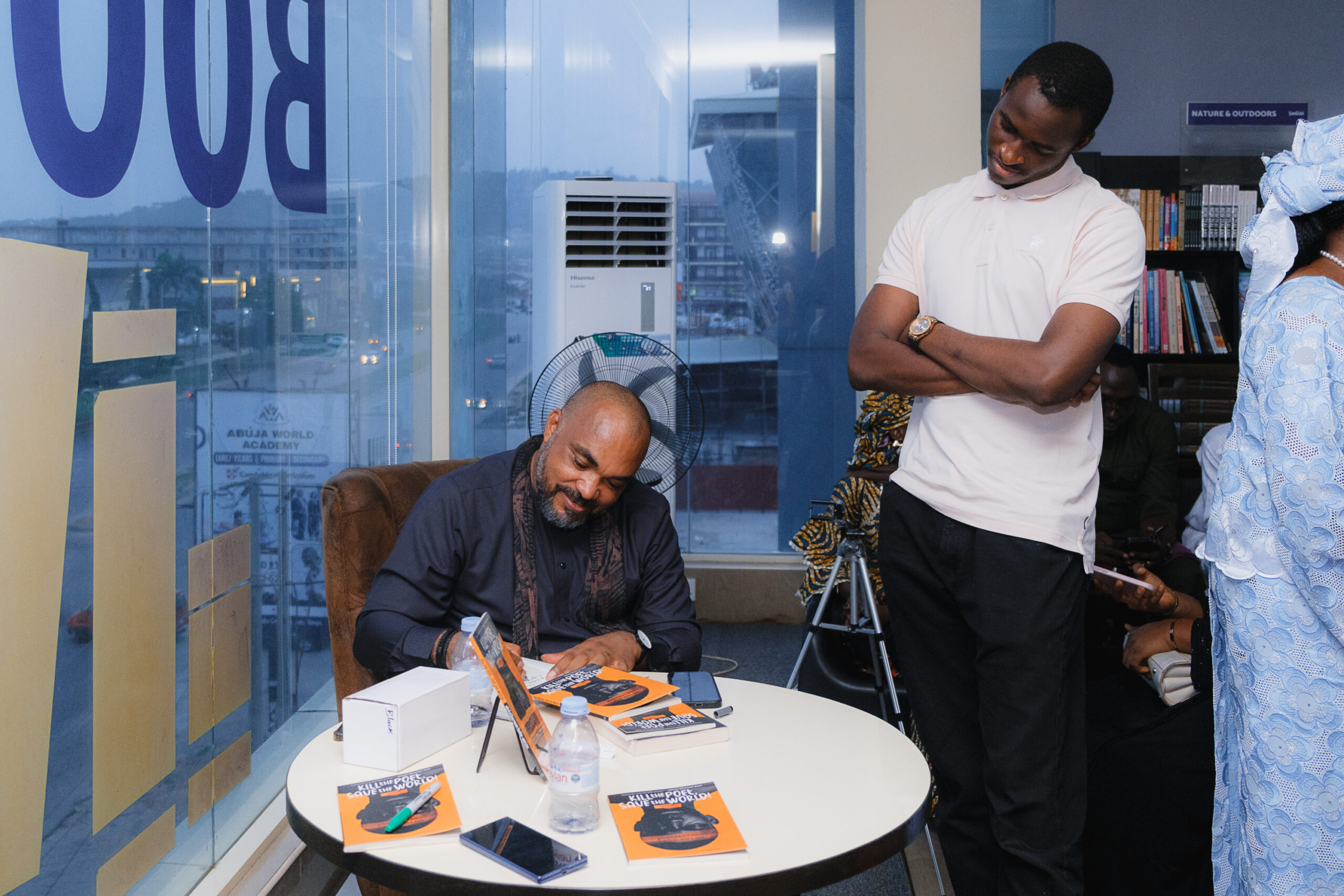
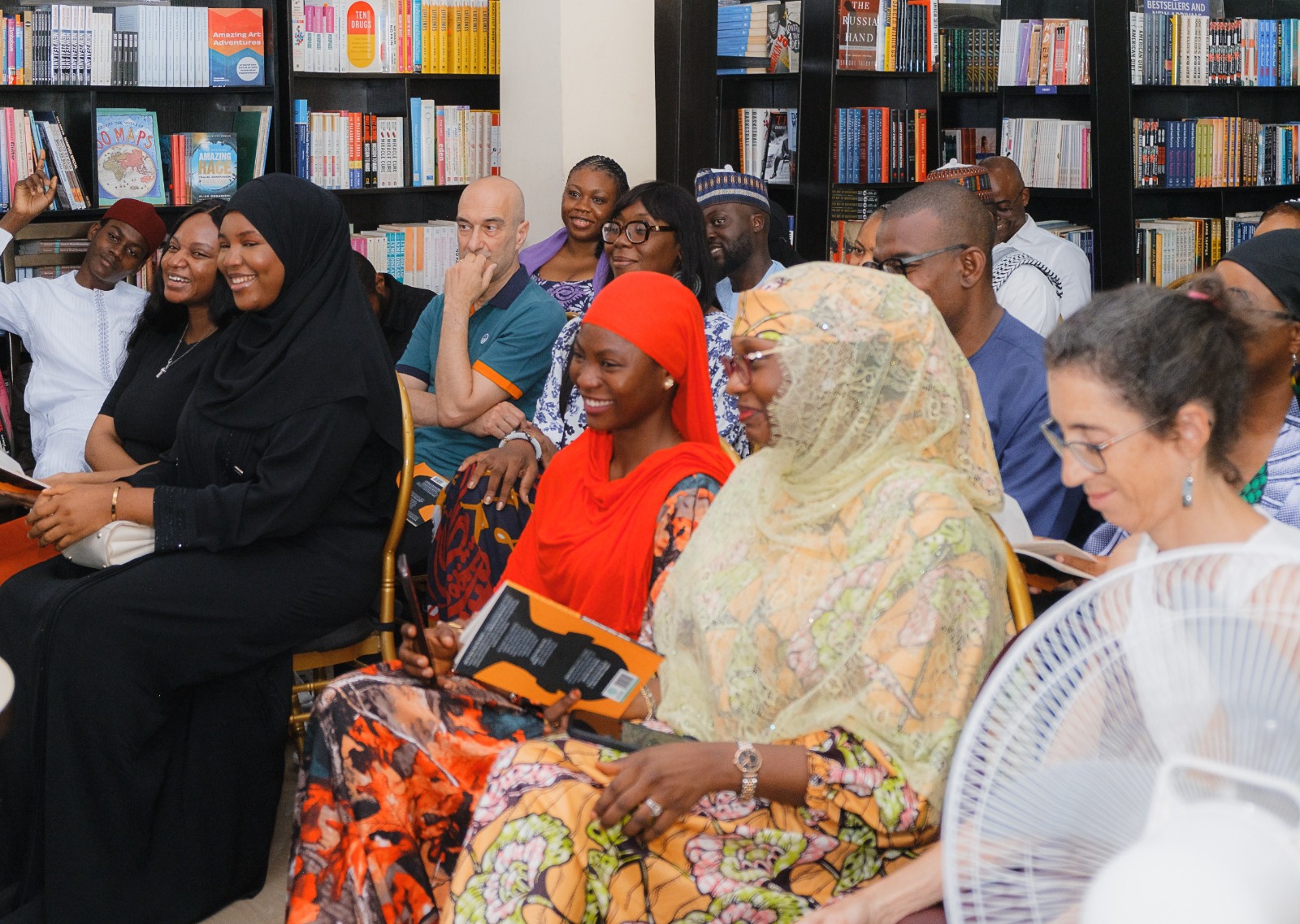
The filmmaker Sebari DS summed up the collection as “simply amazing” while public health practitioner and poetry aficionado Isa Alfadlah said certain elements in the poems reminded him of the work of Allen Ginsberg and the Beat poets as well as that of early post-colonial African poets like Dennis Brutus, J.P. Clark, and António Jacinto. He added that he would like to see a new literary movement, one refocused on the poet as the society’s conscience, emerge from Baba-Aminu’s example. This may not be very far off as University students who wish to write their theses and dissertations on his work have already begun reaching out to the author.
Speaking to The Lagos Review, Baba-Aminu described his childhood in Kaduna as one enriched by early exposure to complex and varied literature. “Poetry was introduced to me by one of my primary school teachers,” he recalled. His interest in the genre evolved into a vocation during his undergraduate studies at the Ahmadu Bello University (ABU), Zaria, where he wrote his first poems. The more he wrote, the more his work gained admirers and attention campus-wide, and he soon realised that his poetry invoked deep feelings in others. It was during this time that he began to see what it was like to have, and write for an audience. As for what he expects readers of his book to take away from the experience, Baba-Aminu expressed a desire for the audience to “feel something, any thing.”
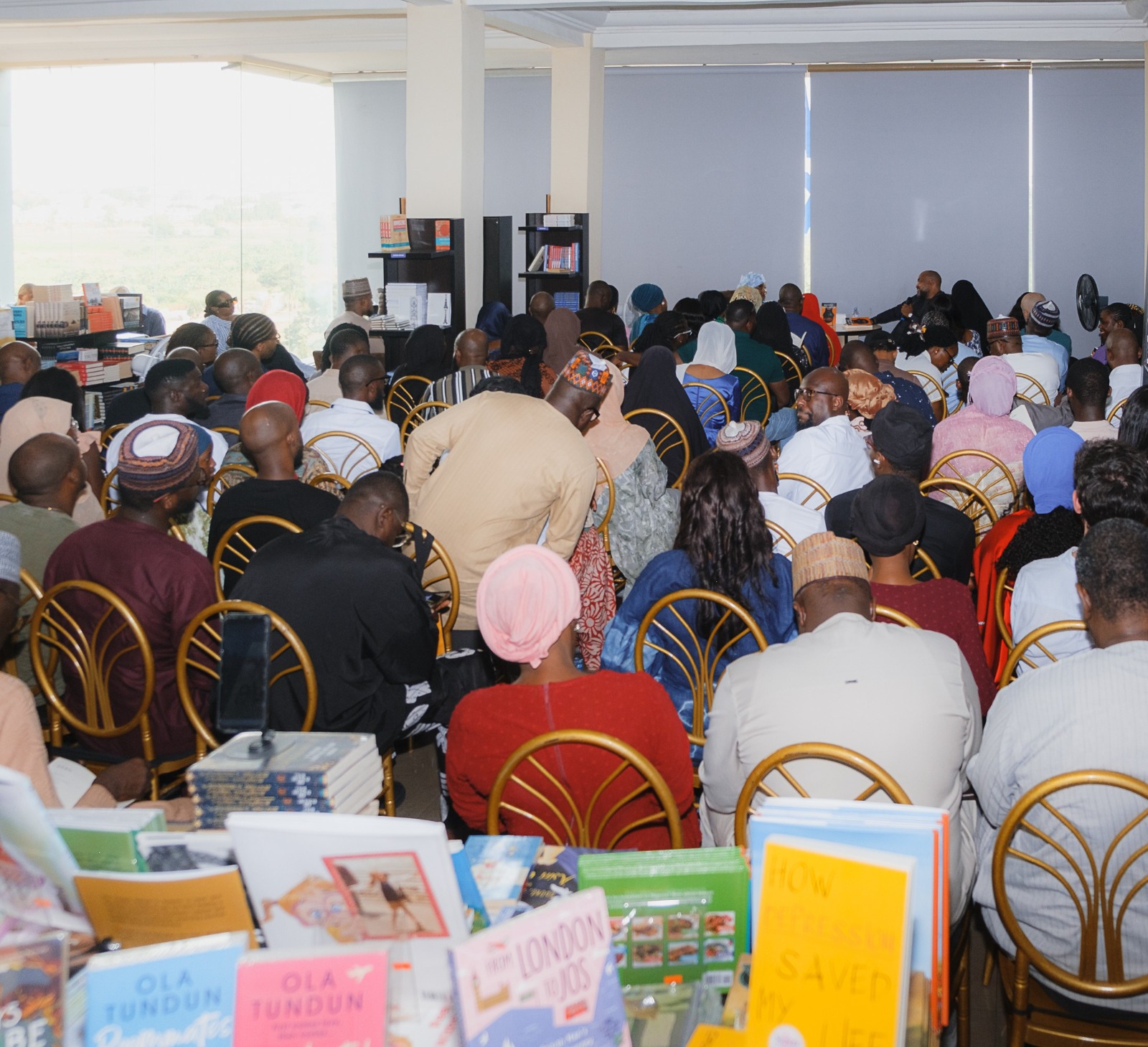
Asked how he successfully juggles multiple interests in journalism, literature, and the visual arts, without compromising on quality or sacrificing productivity, the multi-disciplinary artist and former Editor of Daily Trust responded thus: “I’ve never seen anything as impossible, and I find that everything I do feeds into each other.”
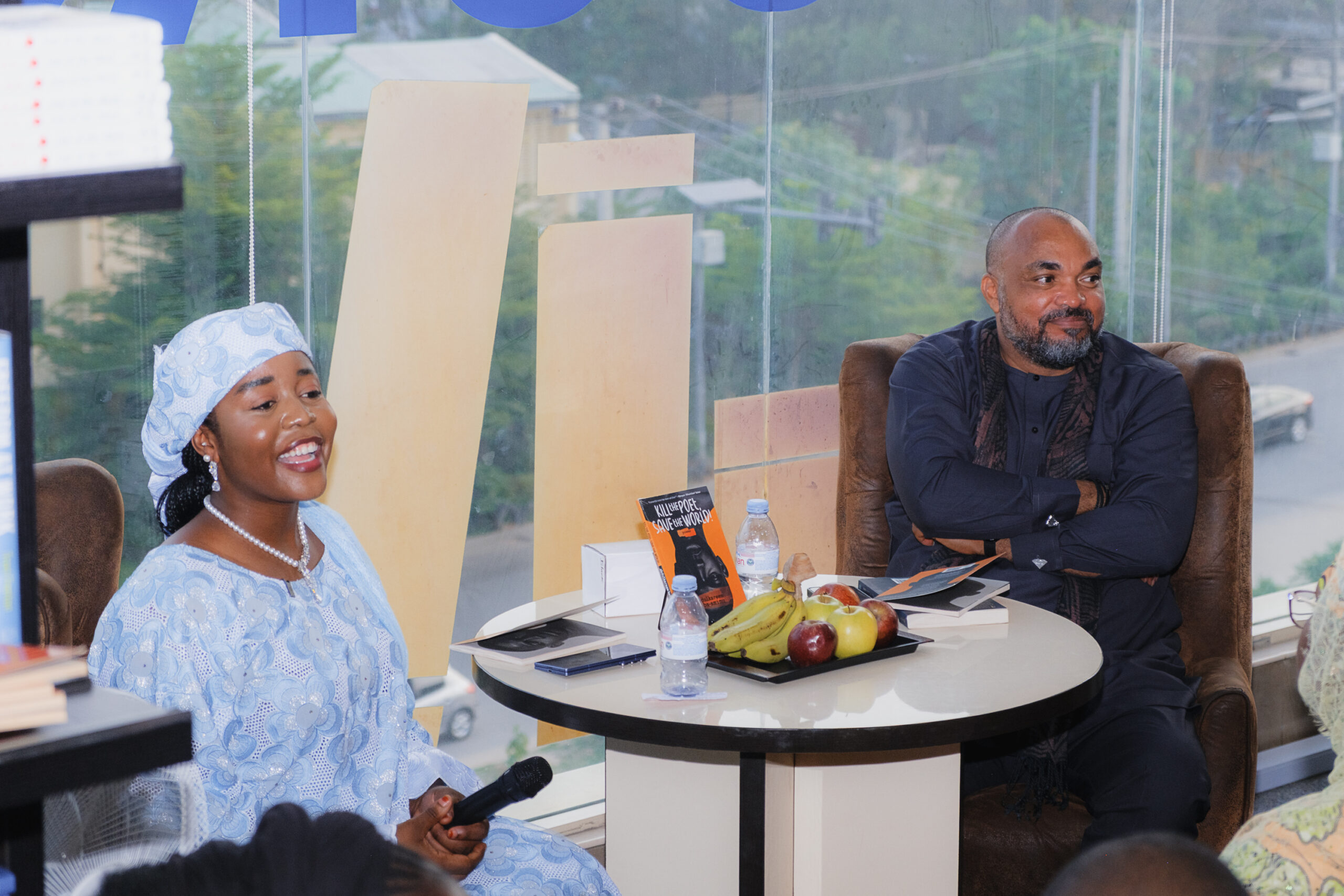
On her part, Maryam Bukar ‘Alhanislam’ Hassan admitted to agreeing to host the event partly out of her admiration for the poetry collection, which she characterised as “sitting at the intersection of memory, politics, and identity,” as well as her close ties to Baba-Aminu, a longstanding family friend whom she described as having been best friends with her mother, the veteran actress and producer, Hauwa Maina. Prior to her passing in 2018, Maina was well-known for her versatile performances in films like Bayajidda, Dry, and Queen Amina of Zazzau. In honour of her mother’s memory, Hassan sported a sky-blue zani da riga that once belonged to her.
Umar Abubakar Sidi, a renowned poet and a captain in the Nigerian Navy, also spoke to The Lagos Review. “Abdulkareem Baba-Aminu has always supported writers and the literary arts,” he said, pointing to Baba-Aminu’s commitment to stocking Nigerian authors and hosting regular literary events at Spine & Label, where he serves as the COO. “Seeing him move from a supporting role to being the one celebrated today is awesome,” Sidi added, just before urging the general public to acquire copies of their own. Contrary to what the title might suggest, “this book is not just for poets; it’s for everyone.”
The event was graced by a host of dignitaries including Roberto Mengoni, Ambassador of Italy to Nigeria; Maria Higon Velasco, Deputy Ambassador of Spain to Nigeria; Malam Mannir Dan-Ali, media veteran and director at Media Trust Ltd; Hajiya Maryam Uwais, human rights activist and business leader; Hauwa Adamul Aliyu, CEO of Adam’s Pages, as well as Major-General HT Wesley.
Other poets and authors in attendance were Mariam Abdullahi, Buchi, Richard Ali, Odafe Atogun, Rafiat Lamidi, Paul Liam, Salamatu Sule, Edify Yakusak, Husayn Zaguru, Star Zahra, and Kabura Zakama, as well as the book influencer, Ibrahim Faruk who runs the @bookscoversandtea Instagram page.
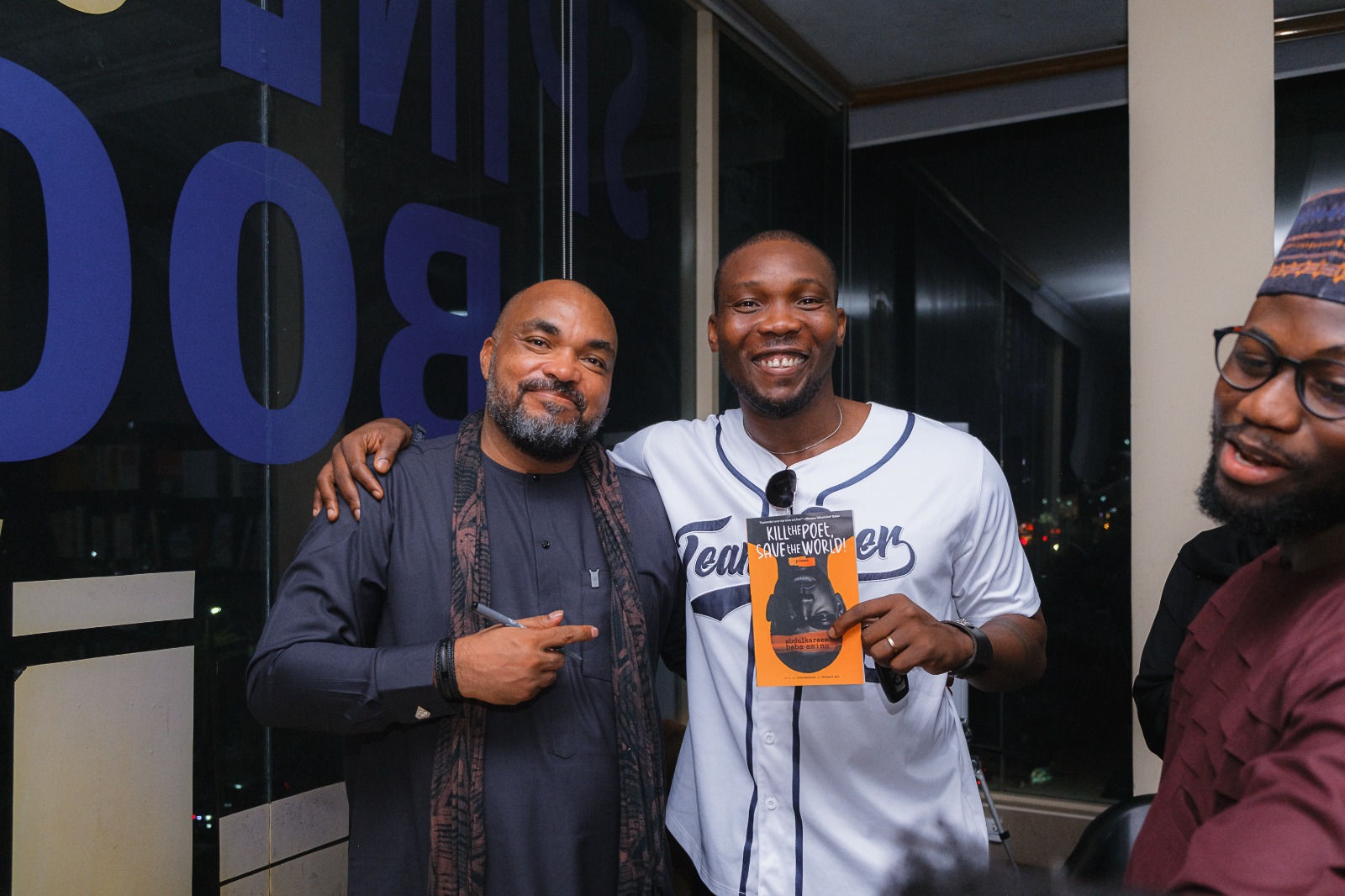
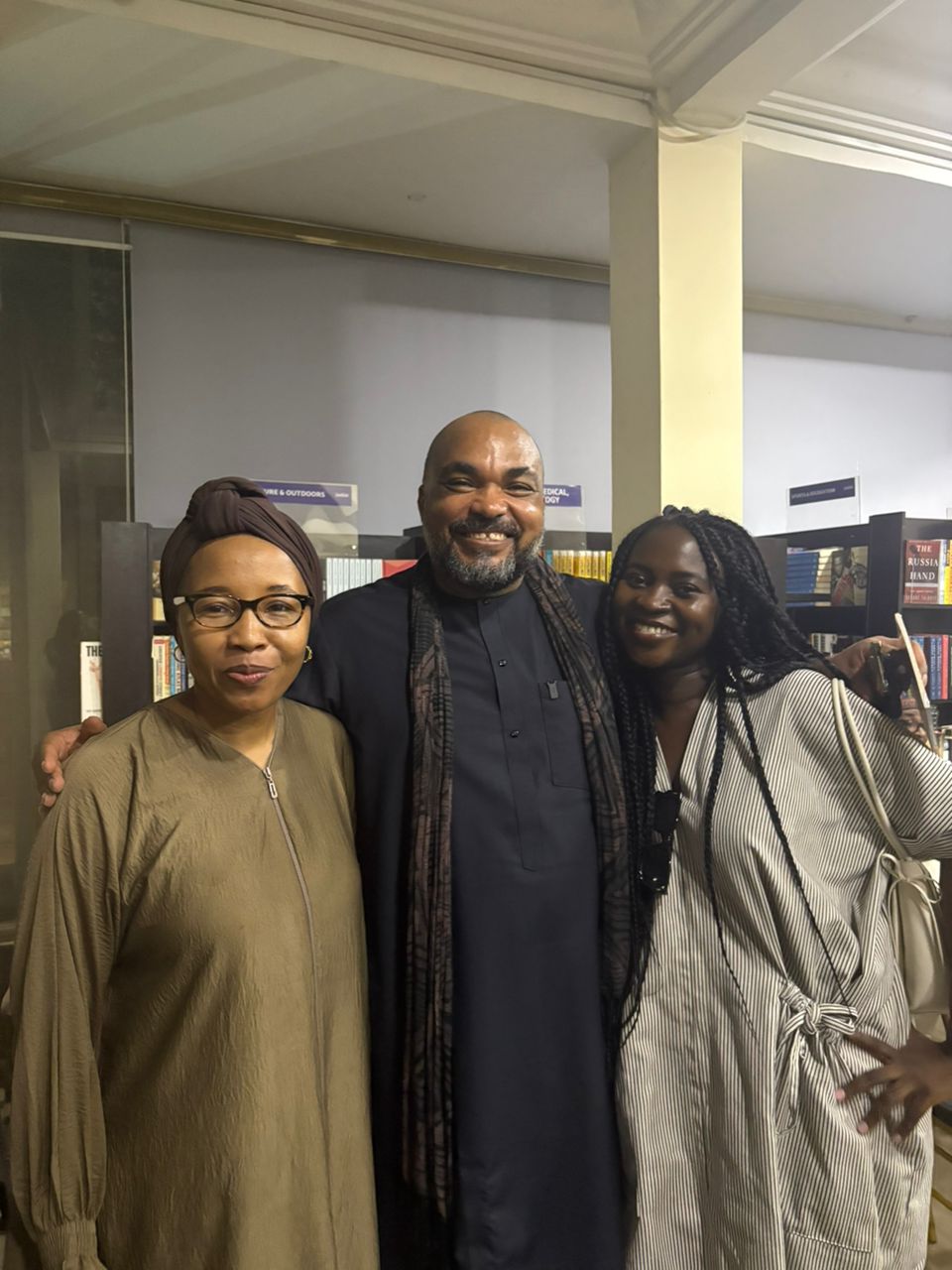
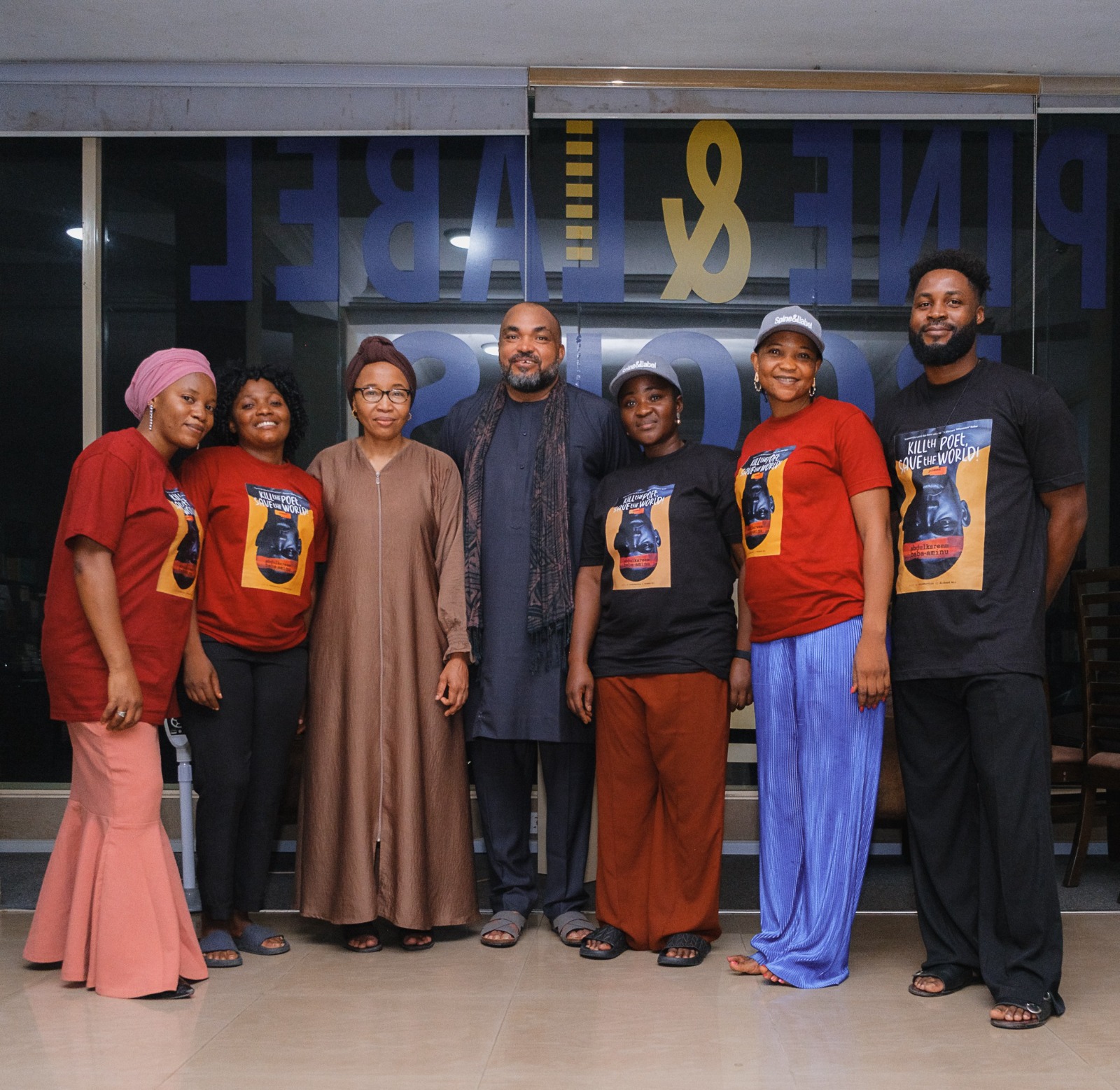
The Spine & Label staff were the epitome of hospitality as they served refreshments, including the now-famous Spine & Label cake, which in this instance was decorated in the book’s colour scheme. Thermal flasks, T-shirts and tote bags, all emblazoned with replicas of the book’s cover design, were also handed out as souvenirs.
After disclosing that he is currently working on a collection of short stories, Abdulkareem Baba-Aminu announced that he will be following up Kill the Poet, Save the World! with the publication of The Herdsboy, an Africanfuturist novel, in 2027.