

From May 20-23 in Nairobi, the Africa Soft Power Summit convenes investors, creators, policymakers and technologists around a single, urgent question: when finance, creativity and human capital compound together, what becomes possible?
There is a gap that anyone who has watched Afrobeats conquer global streaming charts, or seen a Lagos fashion label land in a Paris showroom, or tracked the valuations attached to Nollywood’s streaming rights will recognise instinctively. African creativity travels. African cultural influence is real, measurable and growing. What has not kept pace is the ownership, the infrastructure and the capital that would allow the continent to capture the value its creativity generates rather than export it.
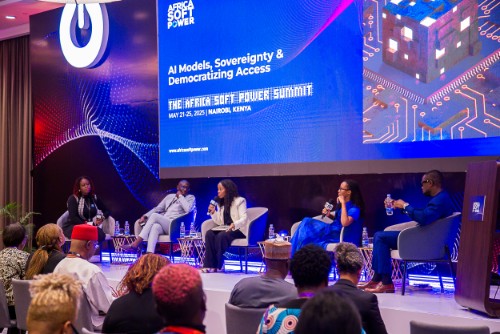
It is that gap, between what African creativity produces and what Africa retains, that lies at the heart of the Africa Soft Power Summit, which opens in Nairobi on May 20 for its seventh edition. The Summit’s theme, “Africa’s Compound Interest: Aligning Ecosystems of Finance, Creativity and Human Capital for Growth,” is less a conference slogan than a diagnosis. The Summit’s organiser, Dr. Nkiru Balonwu, has spent seven years building the argument that this does not have to be the arrangement.
The Compounding Thesis
The language of compound interest is deliberate. It implies patience, alignment and, critically, ownership. Africa Soft Power’s proposition is that cultural influence, human capital and financial flows must be aligned and mutually reinforcing if the continent is to generate durable, self-sustaining growth that capital alone cannot produce.
The explosion of Afrobeats into a genuinely global commercial force, the maturation of African fintech into a sector commanding serious institutional attention, the emergence of African film and fashion as objects of international investment interest: these are the early evidence of compounding at work. What remains unresolved is the ownership question, and that is what the 2026 programme is organised around.
Two Days, Eight Sessions
The 2026 programme divides its conferences across two days, each anchored by a distinct focus area.
Thursday, May 21, is organised around Leadership, Inclusion and Market Power, and powered by African Women on Board. The opening panel, “Designing Power: Women’s Leadership as Economic Infrastructure,” signals the register clearly: this is a conversation about how leadership shapes capital allocation, institutional performance and long-term market function.
That logic runs through the day’s closing session: “The Female Economy: Africa’s Most Undervalued Growth Engine,” which positions female-led demand and supply chains not as a development priority but as a mispriced investment opportunity.
Friday, May 22, turns to Creativity, Innovation, Capital and Commerce, examining how Africa’s creative, technological and cultural influence becomes investable value. From AI and data ownership to diaspora capital and creator economics, the programme asks what it takes to move from visibility to ownership, and from global attention to durable economic value. A session on remittances examines how major diaspora flows into African markets might evolve from consumed transfers into compounding capital. The afternoon closes on the question of who is setting Africa’s investment agenda as development finance institutions re-scope, and as African institutions take on a larger share of the risk.
Confirmed speakers include H.E. Zainab Hawa Bangura, Under-Secretary General and Director-General of the United Nations Office at Nairobi; Alex Okosi, Managing Director for Africa at Google; Heike Harmgart, Managing Director for Sub-Saharan Africa at the European Bank for Reconstruction and Development; Bolanle Austen-Peters, Founder and Artistic Director of BAP Productions; Oladapo ‘D’banj’ Daniel Oyebanjo, entertainer and music executive; Rita Dominic, actor, filmmaker and co-founder of The Audrey Silva Company; Rukky Ladoja, Founder of Dye Lab; Uche Ofodile, CEO of MTN Benin; Vimal Shah, Chairperson of Bidco Africa; Sneha Mehta, CEO of Uncover; and Kate Kallot, Founder and CEO of Amini, among a broader faculty drawn from across Africa, the diaspora and global institutions.
Beyond the Panels
The Summit has always insisted that the formal sessions are only part of what it is. Thursday evening’s Women Unscripted: Off the Record offers an intimate gathering built around honest conversation rather than structured debate. Friday evening centres on an exclusive event with Dye Lab, one of Africa’s most compelling fashion brands, in which the Summit’s argument about culture as investable infrastructure is embodied rather than merely discussed.
The Gala on Saturday evening at the JW Marriott Nairobi follows: a fashion-forward red-carpet event featuring award presentations, a live fashion exhibition and live performances. It is the Summit’s argument made tangible: African culture is not a soft accompaniment to the business of finance and policy. It is the business.
The Summit does not end at the Gala. Delegates are invited to extend their stay through curated excursions across Nairobi and beyond: private safaris, cultural immersions and bespoke city experiences that position Nairobi not merely as a host city but as an active part of the Summit’s argument
Seven Editions In
The Africa Soft Power Summit began as two virtual editions during the pandemic years of 2020 and 2021, moved in-person in 2022, and has grown through four successive editions, assembling a faculty that has included voices from Netflix, Meta, Mastercard, Google, MTN, the NBA, Safaricom, Afreximbank, the IFC, AfCFTA and the NGX Group, alongside ministers, former heads of state and cultural figures shaping how Africa is perceived and engaged with globally.
The questions the 2026 edition is asking, about ownership, about capital, about who gets to define what African creativity and innovation are worth, are not new. But the room in which they are being asked is becoming, edition by edition, harder to ignore.
The Africa Soft Power Summit 2026 takes place May 20–23 in Nairobi, Kenya. Delegate passes for the conference days are available at bit.ly/ASP2026PASS. For further information: www.africasoftpower.com