

13 years after its debut, a slew of awards, and rousing critical reception, Kenneth Gyang’s Confusion Na Wa returns via Kava.tv.
Kenneth Gyang’s Confusion Na Wa (2013) begins with something almost insultingly ordinary: a missing mobile phone. From that small disruption, the film constructs an increasingly complicated web of crime, infidelity, workplace frustration, family anxiety and bad decisions. More than a decade after its release, and now available on Kava, the film remains striking not because it predicted the future, but because it understood how quickly absurdity can overwhelm ordinary Nigerian life. What looks like a comedy gradually reveals itself as a tightly constructed noir, one whose greatest trick is finding drama in the mundane.
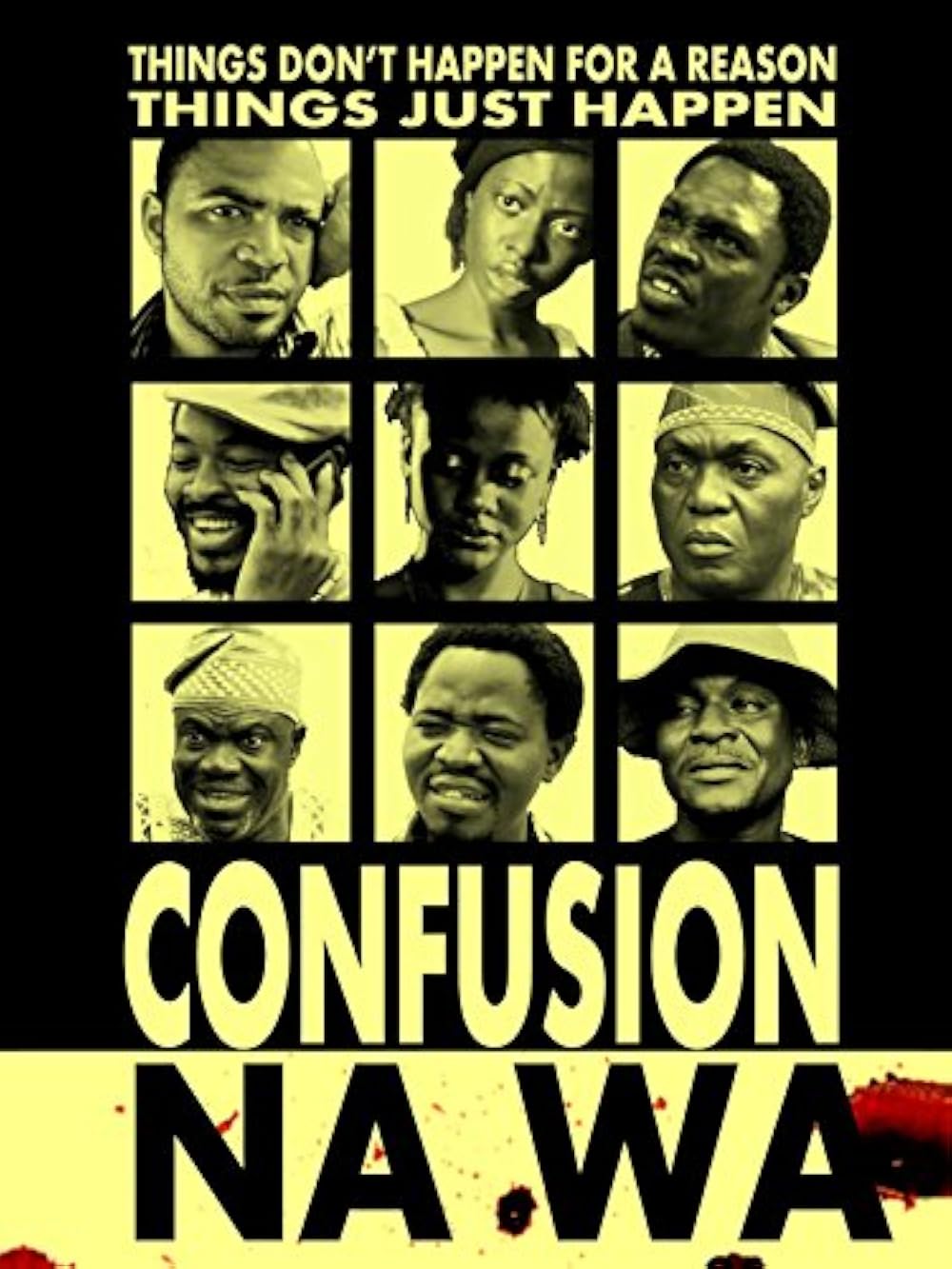 The premise places Confusion Na Wa comfortably within the tradition of films built around intersecting lives. A phone passes between hands, and with it come secrets that were never meant to travel. Characters who initially appear unrelated become connected through coincidence, desperation and their own poor choices. There are obvious echoes of Pulp Fiction in its fractured storytelling, criminal oddballs, and playful camerawork, particularly its memorable car sequences. But Gyang does not simply imitate that tradition. He gives it a distinctly Nigerian texture, where the stakes are often less about grand criminal schemes than about money, jobs, marriages, reputation and survival.
That Nigerian texture is one of the film’s greatest strengths. Gyang notably avoids making Lagos the default shorthand for contemporary Nigerian urban life. His unnamed city instead feels like a composite of urban spaces Nigerian: offices, streets, cars, homes and bars where people negotiate the small crises that consume their lives. A man prioritises financial stability over childbirth. A father is consumed by homophobic paranoia. Workers contend with professional ineptitude and corruption. Petty criminals develop their own philosophies for surviving. Nobody exists entirely outside the country’s moral contradictions.
The film’s humour comes from these contradictions. Gyang rarely needs to tell us whom to laugh at because his characters frequently expose their own absurdity. Someone can be sympathetic in one scene and reprehensible in another; a criminal can be ridiculous without being harmless; a respectable person can behave in ways that are anything but respectable. The result is a (a)moral universe where almost everyone is compromised, but not necessarily in the same way.
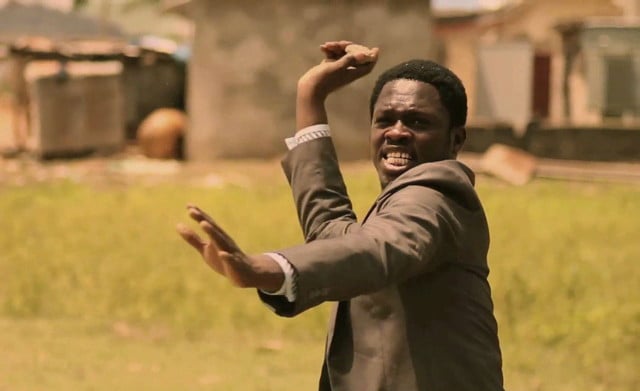 This is where the screenplay becomes particularly effective. Confusion Na Wa understands the pleasure of withholding information and allowing apparently disconnected details to acquire significance later. Its labyrinth is built from remarkably simple materials. There are no elaborate conspiracies or spectacular set pieces required to sustain the tension. Instead, Gyang lets one bad decision produce another until the consequences become impossible to contain. The film’s title eventually feels less like a joke than an accurate description of its worldview.
Its technical execution is even more impressive considering the film’s modest scale. The camera is often expressive without calling attention to itself, while the editing gives the narrative its restless momentum. The car sequences are especially inventive, and the film’s visual language occasionally recalls the pulpier pleasures of American crime cinema without losing its Nigerian identity. The soundtrack deserves equal attention, helping the film move between comedy, melancholy, and dread with surprising ease.
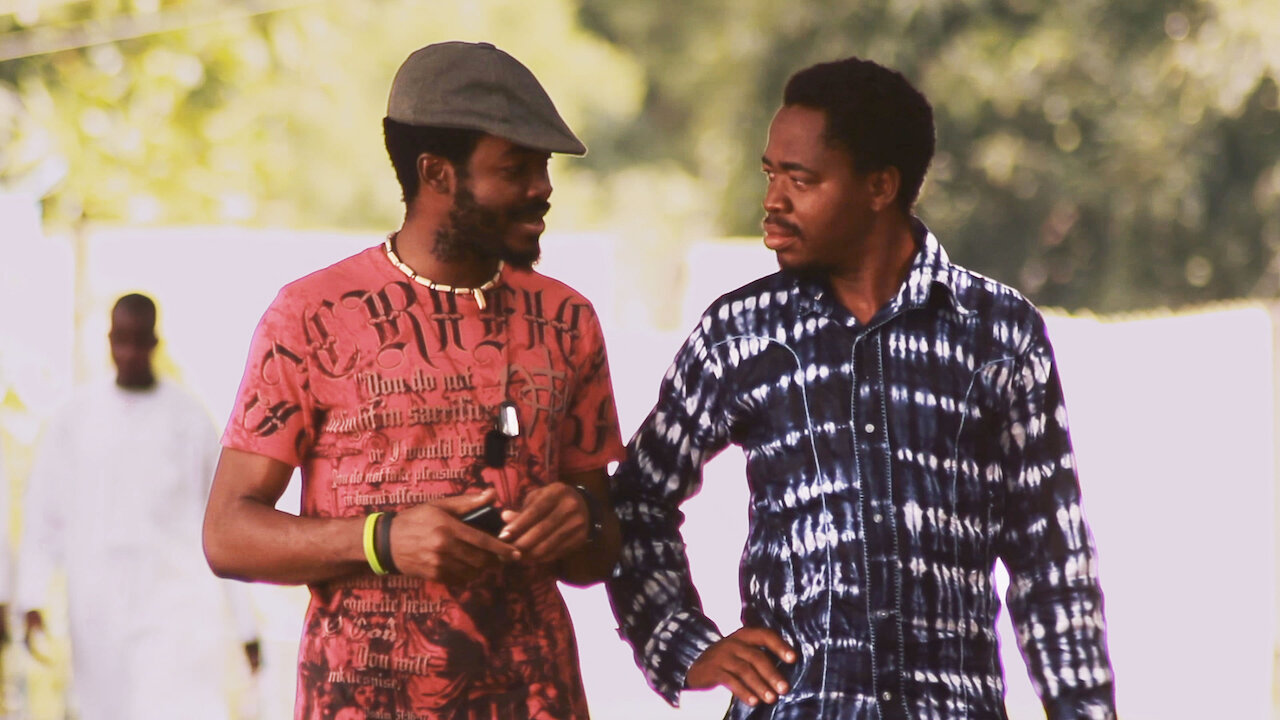
The acting is less consistent. O.C. Ukeje brings considerable energy to Charles, while Gold Ikponmwosa’s eccentric Uchiche becomes one of the film’s most memorable characters, particularly in his scenes with Ukeje. Their chemistry supplies much of the film’s comic electricity. Ali Nuhu’s Bello is more uneven; the character’s nervous, restrained disposition occasionally becomes stilted rather than convincingly subdued. Some supporting performances similarly reveal the limitations of a production assembled from actors with varying levels of experience (at the time). The dialogue has aged reasonably well, although the relative scarcity of code-switching is noticeable beside the more linguistically fluid Nigerian films audiences encounter today.
 The film is not without its rough edges. Some action sequences lack convincing physical impact, and its effects occasionally betray its budget. But these imperfections are ultimately less consequential than what Gyang achieves with the resources available to him. Confusion Na Wa is a film of considerable ambition disguised as something smaller and more accessible.
Its return to circulation on Kava therefore feels useful. The film has already accumulated awards and critical recognition, but availability determines which films remain part of a cinema’s living memory. Revisiting Confusion Na Wa today reveals an unsung Nollywood classic that understood something deceptively simple: lives do not need to be extraordinary to produce extraordinary stories. Sometimes all it takes is a phone, a few bad decisions and a city full of people trying to get through the day. And beneath all the confusion, Gyang finds the beauty of mundanity.
***Joseph Jonathan is a Film & Culture Critic. Catch him on X @chukwu2big