

If there was ever a universal commandment for readers, it would be “never judge a book by its cover,” which in its most literal sense means that a book’s outward appearance is no indication of its literary value or worth. In that vein, another commandment might as well be “Never judge a book by its title.” The latter would have been a much needed directive to the Nigerian Twitter users who greeted the author Chinkemkasimma Cassidy Chukwuma’s August 19, 2026 announcement of her debut novel Husband Is Useless with uproar.
With very little to go on besides the book’s sensational title, some Twitter denizens accused the author of misandry, while others promised to avoid the book on the account that it had potential to invite discord into their own marriages. For Nollywood fans, the provocative title recalled memories of Widows Cot, the 2005 Nollywood women’s rights slash revenge drama whose soundtrack had the memorable lyrics: “Husband is useless, yeye man must die….”
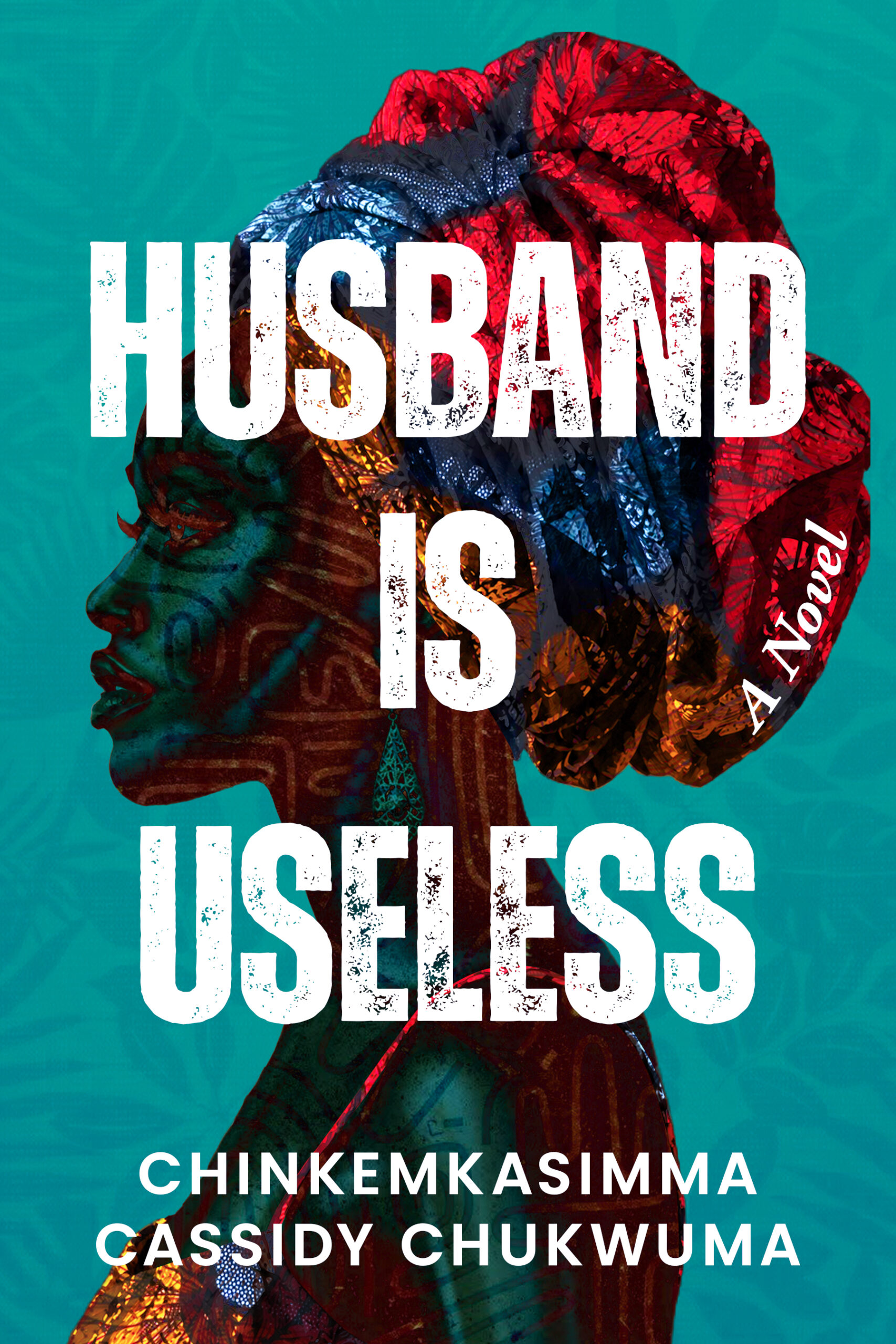 When you take away the melodrama, what then is Chukwuma’s novel about, and is there any merit to its traducers’ concerns?
Narrated in first person, Husband Is Useless traces the evolution of Folasade Mary-Margaret Ajani, popularly called Sade, from a feisty child to a weather-beaten adult. Despite being subjected to a restrictive upbringing by parents who believe a girl’s wings are to be clipped, she puts up a strong resistance to her parents’ matchmaking efforts until a family scandal pressures her into giving in to marriage to spare her loved ones from shame.
Her marriage to Chief Adekunle, a wealthy man decades older than her proves to be a gilded cage. Materially, Sade lacks for nothing, however her freedom of movement is restricted, and she endures physical and emotional abuse. After her husband dies under suspicious circumstances, she regains a sense of freedom and purpose, until the social ostracism she experiences in her community as a result of her husband’s demise persuades her to make a second attempt at matrimony.
For Sade, marrying Baba Ogundipe, an already married carpenter based in Igboland, silences her critics, but in exchange, she relinquishes Lagos for Onitsha where she has to adapt to a new language, a new culture, and learn to navigate the tensions and dynamics that come with living in a polygamous marriage. Barely settled into her new life in Onitsha, she embarks on a forbidden romance with Chidi, one of Baba’s apprentices. This extramarital affair, together with her friendship with the mysterious and mercurial Ivie, complicates her life even more.
Chukwuma is adept at capturing cultural nuances in her writing. She has an ear for languages, displaying familiarity with both Igbo and Yoruba while retaining a narrative voice that is distinctly fluent in Nigerian English. Her multilayered approach to character-building and her inclusion of realistic dialogue make the people she has populated her book with as compelling as they are complex. In addition, her decision to situate the majority of her plot in the late 90s and early 2000s is well done and lends the book a nostalgic atmosphere.
Most importantly, wrapped up in these stylistic choices is a cautionary tale that perfectly illustrates the Akan proverb, “Ɔbarima nyɛ sumiiɛ na wode wo ti ato no so,” which translates in English as “A man is not a pillow that you should put your head on.”
Sade’s plight exposes the societal double standards in mandating that women need a husband’s protection and provision while also expecting women to compensate for their husband’s inability to protect and provide. Through Sade, Chukwuma also celebrates how women, despite being pressured into conformity, maintain resilience and still find avenues to exercise agency.
Husband is Useless may be her debut, but Chukwuma writes with the verve and wit of a much more experienced author. This is a writer who has carefully honed her craft pre-publication and it shows. With this novel as a precedent, it is not overly optimistic to expect a steady output of excellent prose from her. Hopefully, whatever she decides to title her successive publication, the general public would have learned by then to read books ahead of commentating on them.
**Akumbu Uche is a writer and storyteller from Nigeria. A regular contributor to thelagosreview.ng, her work in arts journalism and cultural criticism has also been published by African Business, Cultbytes, IMPULSE Magazine, The Nation, New African Magazine, Service95 and Strange Horizons. Follow her on X @xoakumbu