

I arrived in Lagos from Benin City on Monday, November 8, after two superb days at the just-concluded second Black Muse Art Festival, hosted by Angels & Muse.
Drawing participants of all ages and nationalities, this festival, themed after Ben Okri’s fable Astonishing the Gods, truly astonishes.
 From the three venues, which showcase the artistic excellence and uniquely Benin-tradition-inspired design of Angels & Muse founder Victor Ehikhamenor, to the fascinating people in attendance, the art, the panel sessions and the conversations, the 2026 edition sets the bar for art festivals in West Africa and beyond as a true celebration of African art.
 Hosted at Black Muse’s Akorele House and its Sculpture Park, situated a few minutes’ drive away, the festival afforded me the opportunity to finally visit the Black Muse Residence, a residential space that can host up to 15 artists in residence. This expanded capacity, compared with the Angels & Muse Residence in Lagos, allows more artists to experience and learn in Victor’s uniquely designed art space, which is richly green and showcases the rich art of his Benin heritage. It is indeed an experience, from the uniquely carved front door studded with miniature Benin sculptures to the stained glass windows and the carefully eclectic art adorning the walls.
 The festival brings together artists, curators, writers and art enthusiasts from all walks of life and from all over the world. I was struck by how many young people actively participated, volunteered and owned the event. They did so with the spirit of excellence, humility and dedication with which their founder does everything. The hospitality was top-notch and the food was superb. Of course, what is a visit to Benin City without eating its famed and super-healthy black soup?
 The opening session, ‘How Do We Astonish the Gods?’, was moderated by poet Wana Udobang, with thought-provoking conversations featuring Port Harcourt-based artist Diseye Tantua, Cameroonian curator and art historian Aude Christel Mgba, and Victor Ehikhamenor himself. As Diseye spoke about really seeing what has always been there, refusing to look away, and creating art and finding value from cracked TV screens (of all things!), I found myself thinking about how the Bible says we are gods ourselves, and how Jesus Christ was astonished (or amazed) by the faith of the Centurion and also by the lack of faith of those from His own hometown. In the first instance, He was able to perform an astonishing miracle from a distance, with the power of thought.
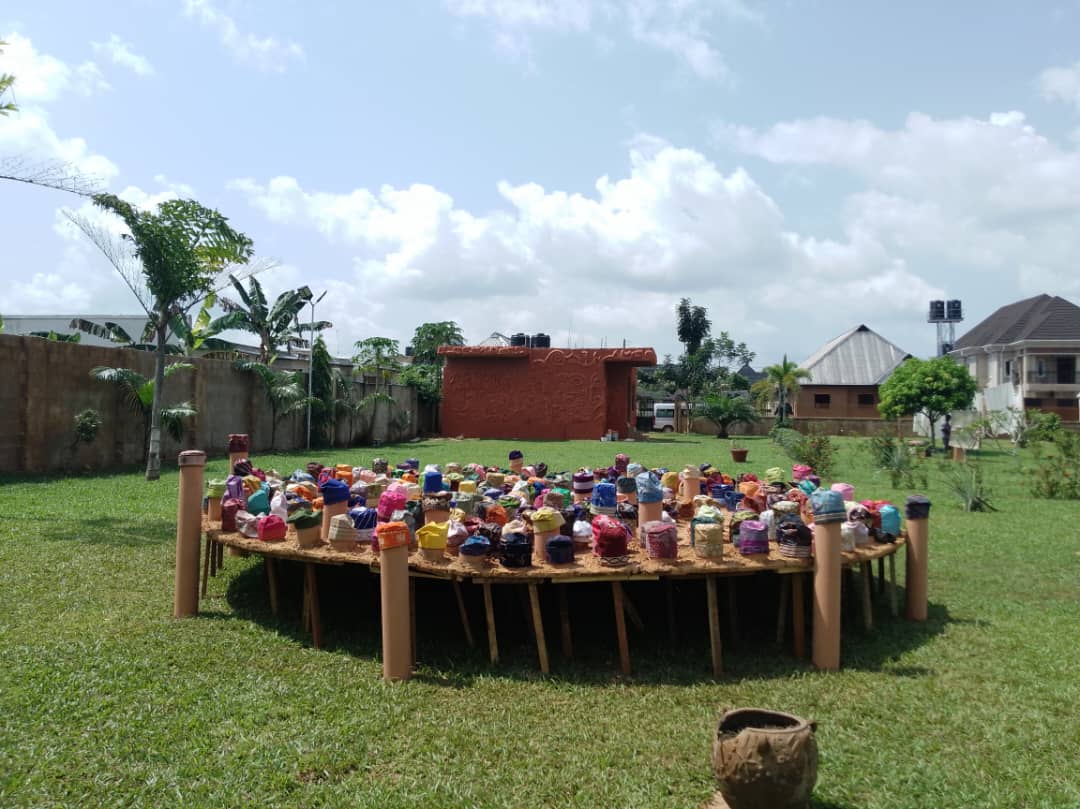
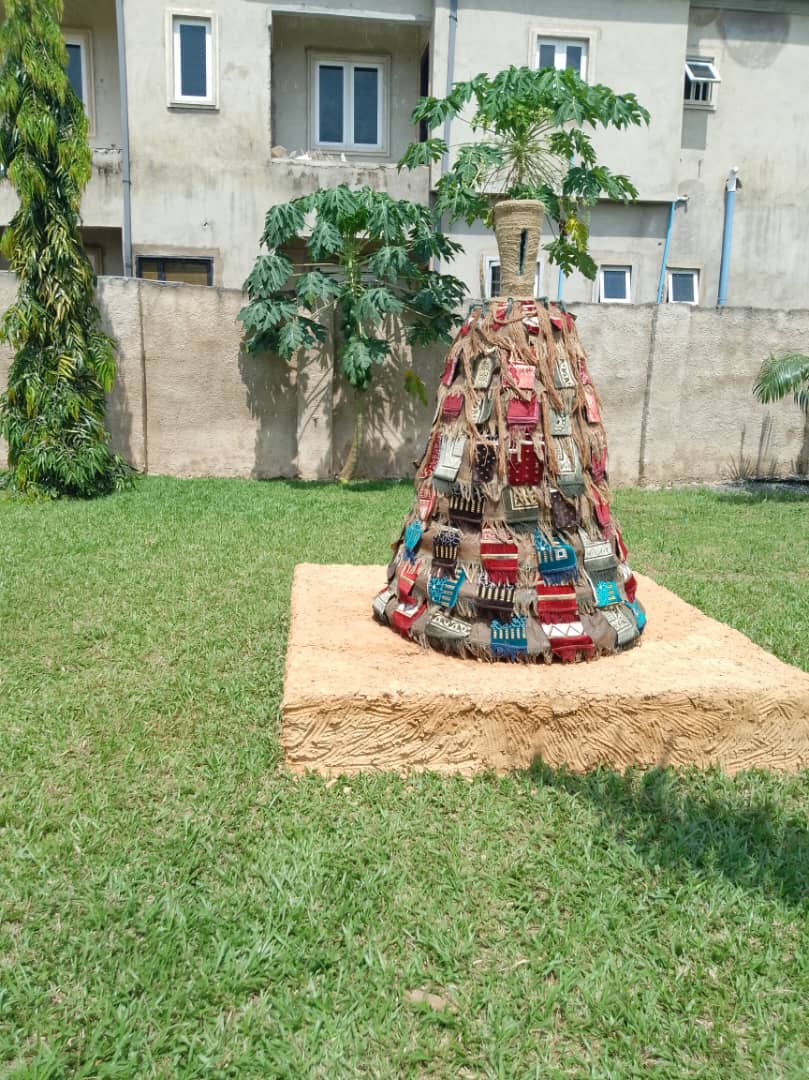
I got to thinking how artists like Victor, Diseye, Wana and the many others who showcased their work at the festival are, in their own right, miracle workers. To conceptualise, imagine and birth the works these artists do is a miracle of sorts, and they are astonishers in their own right, with the quality of God which they imitate: the ability to envision and to create, to see things that are not as though they were. Whether it be the re-imagining of the concept of “Ori Inu” by Badru Abiodun with his installation of over 400 caps at the Sculpture Park, or Ohiolei Ohiwerei’s thoughtful rendering of masquerades, using recycled jute as mirrors to show our very human tendency to wear masks. I loved that you could stand on a clay stand and see yourself in his mirror. Basically, we all wear our masks. More on this later.
Participants also learnt about the environmentally conscious art of Andrea Chung and Omolara Williams McCallister, who taught us how to make paper from recycled denim. That was a fun experience, but hard work, too!
Interspersed with these interesting sights and experiences were panel discussions on ‘Institutional Collaborations Across Geographies’ with Angels & Muse’s Roli O’tsemaye and independent curator Selene Wendt.
Traditional ideas about publishing in books alone were challenged in a conversation on publishing and archiving with Ghanaian curator Esinam Damalie, Somali-Dutch curator Amal Alhaag and Lagos-based curator and researcher Angel Akua. Esinam and Amal reminded us that publishing and archiving can occur even biologically, with our bodies, and through Africa’s rich tradition of oral storytelling and memory. Books are good and important, yes, but there are other ways to publish and archive which are equally valid. I was reminded of the tattoos displayed by older women in my mother’s village, Wannune in Benue State, and of the Tiv tradition in my father’s time of typically naming people after the events happening around them at the time. For example, my name, Ier, meaning ‘it has happened,’ was a cryptic double allusion by my grandmother to the many things she had experienced in her life up to the time I was born: the loss of her son and of her friend, who was also named Ier, but also the arrival of her first granddaughter.
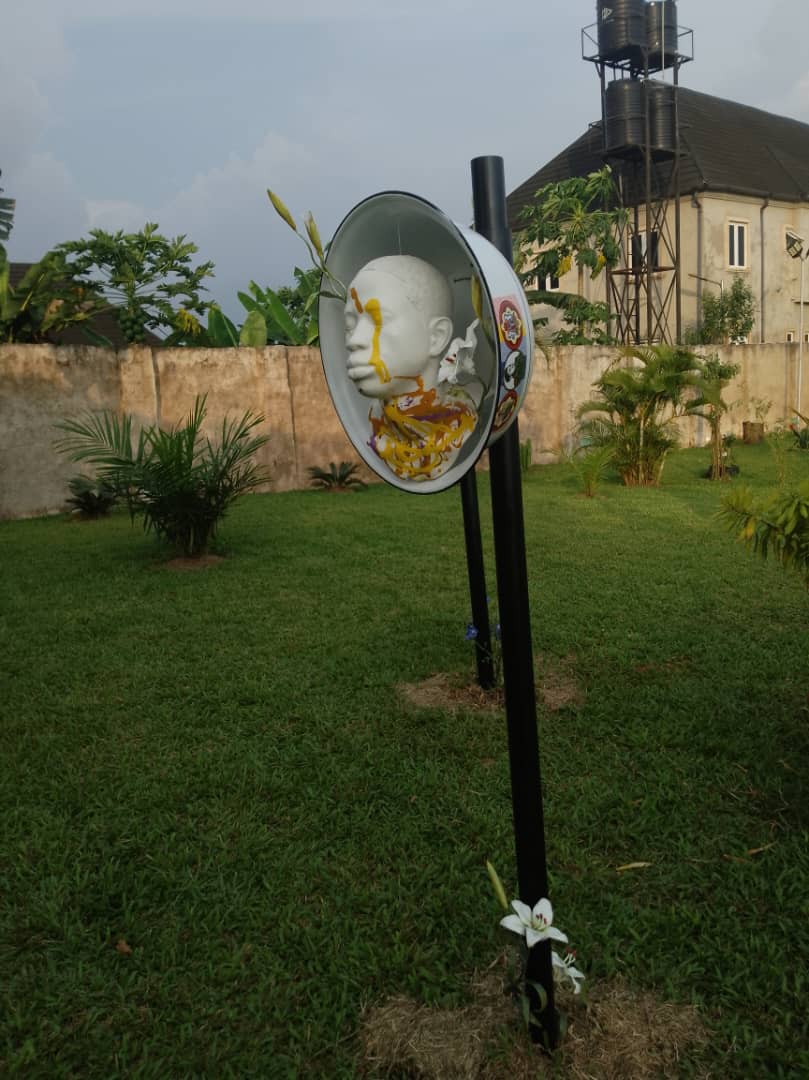
From those conversations, we moved on to the Sculpture Park exhibition, titled “What Seeks Us is Better Than What We Seek” and curated by Esinam R. Damalie. The park is an uplifting green space encased by Ehikhamenor’s clay-sculptured fence, one of my favourite aspects of the space. There we enjoyed watching the highly entertaining and acrobatic Esan Cultural Troupe jump and twist mid-air, read Wana’s evocative and poignant poetry (‘Dirty Laundry’) fluttering on sheets in the wind, saw Jonathan Chambalin’s cactus-inspired sculpture “Daily Grounding” and sat in horticulturist Bridget Edheroveno’s garden, where we were astonished by nature’s rich plant offerings.
There was also Haneefah Adam’s red sculpture of a girl surrounded by mirrors, and we hung up notes to ancestors at Ofem Obi’s installation “The House that Words Built,” housed in the park’s Azagba pavilion. This year’s pavilion was constructed by architects Juachi Obi and Tobiloba Akibo, drawing on natural materials of straw and jute encased in triangular frames, building closer to nature. Ephraim Ngukaam’s “Memory of Things Once Was,” commemorating those who have gone before us, topped off the offerings before the gods at the Sculpture Park. It won this year’s Black Muse Patron’s Prize, awarded to the work that best matched the prize’s focus on memory.
Auditory art by Onyebeat, a choral ensemble led by Charles Ikechukwu Onwubuya, closed out the Sculpture Park exhibition. I wept at the beauty of their sound, which reminded me of Prof Laz Ekwueme’s choir in the 1990s and early 2000s.
The rest of the festival was a rich buffet of drama, film and more art re-imagined. Unfortunately, I had to leave only two days into the festival, but the two days I spent there reminded me of the megawatt astonishment factor of God’s work and the special miracle workers He has blessed our world with in the artists we got to experience. Indeed, what found me was infinitely better than what I went seeking. I wanted to visit Black Muse and enjoy art. What I found was deeper, richer and more enriching to my soul than I ever imagined.
Catch glimpses of the festival on the Black Muse Art Festival’s Instagram page.
***Ier Jonathan-Ichaver is a social entrepreneur and art enthusiast